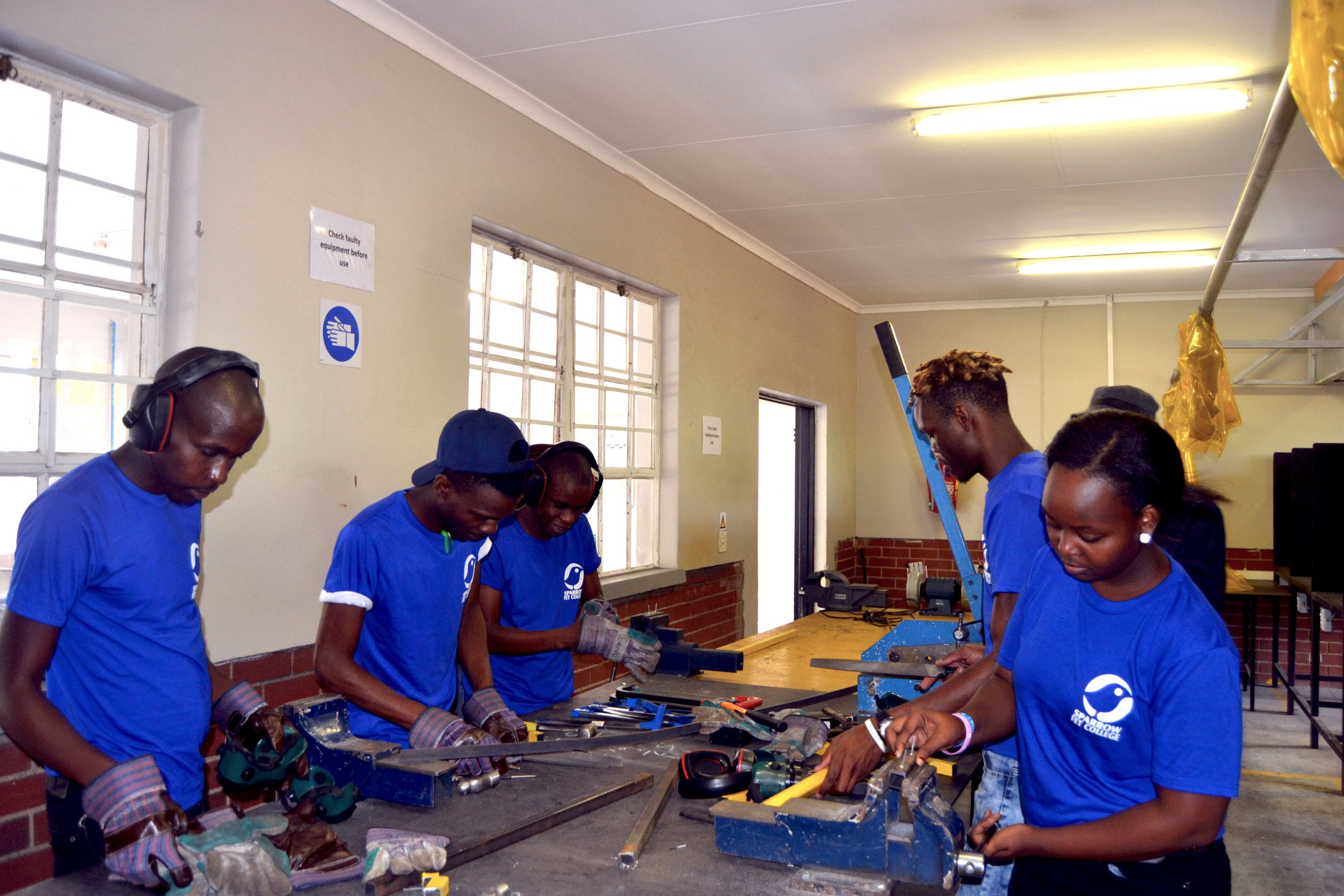
The factory floor is becoming the new classroom. It is reshaping how skills are developed across South Africa’s manufacturing sector.
Factories are becoming classrooms. They are embedding learning directly into the workplace. Businesses are building practical, work-ready talent. At the same time, they are strengthening productivity. This approach offers a powerful solution to the country’s skills gap.
25 March 2026, Johannesburg: What if the solution to South Africa’s skills crisis is not in a classroom, but on the factory floor?
Why The Factory Floor Is Changing Skills Development
Across the furniture manufacturing sector, a quiet but powerful shift is underway. Employers are rethinking how and where people learn. They are moving away from traditional, theory-heavy training models. Instead, they are embedding learning directly into the workplace.
The result is a more practical, immediate, and scalable approach to skills development. This approach is already reshaping the industry.
At a time when youth unemployment remains critically high, businesses face global competition. Workplace-based learning is emerging as a solution. It speaks directly to South Africa’s realities.
Why Workplace-Based Learning Makes Sense
“Workplace-based learning changes everything,” says Lynn Adonis, Administrator and Qualifications Manager at the South African Furniture Initiative (SAFI).
“It allows people to learn in real environments, under real conditions. Productivity, quality, and accountability matter every day.”
Unlike traditional training, workplace-based learning integrates training with production. Learners do not just acquire knowledge. They apply it immediately. They contribute to output while building confidence and competence.
In South Africa, the gap between education and employment remains a major barrier. This model creates a practical bridge.
“We’ve seen for years that classroom learning alone does not fully prepare people for industry,” Adonis explains. “When training happens on the factory floor, that gap disappears. Learners become work-ready faster because they are already part of the system.”
From Compliance to Competitive Advantage
For manufacturers, the benefits are clear. Training aligns with real production processes. It reduces errors, improves efficiency, and strengthens quality control.
Skills development is no longer just compliance. It becomes a driver of performance.
This is the shift SAFI aims to accelerate.
SAFI positions itself at the centre of industry-led skills development. It embeds structured, accredited learning directly into manufacturing environments. Its approach is clear. If South Africa wants to rebuild its industrial base, skills must be developed on the factory floor.
“Skills development cannot sit on the sidelines,” Adonis explains. “If we want to strengthen manufacturing, it must be part of daily operations. That is where it has the greatest impact.”
Building Skills Directly on The Factory Floor
SAFI is rolling out SETA-funded Facilitator Programmes. These programmes build internal training capacity within businesses.
Instead of relying on external providers, companies train their own employees. This creates sustainable, in-house skills pipelines.
Launched in January 2026, the Work-Based Learning and Development Practitioner Qualification has already enrolled 35 learners. These learners are preparing for roles as facilitators, assessors, and mentors.
“Developing occupational training practitioners inside factories is critical,” says Adonis. “It allows training to become continuous and structured. It aligns with production realities. Factories are no longer just production spaces. They are places where skills are developed and transferred.”
Accreditation and Recognised Skills
SAFI also supports manufacturers in becoming accredited training providers. This allows businesses to offer nationally recognised qualifications. These include furniture making, upholstery, and design.
For many companies, this is a turning point.
“Accreditation formalises what was once informal learning,” Adonis explains. “It ensures skills are recognised, transferable, and aligned with national standards. This benefits both businesses and individuals.”
Momentum is growing. More manufacturers are moving through the accreditation process. Early success stories are emerging.
Sihlalo Youth Development has achieved accreditation. It has launched its first programme with 20 learners. This proves that full training systems can exist within production environments.
“This is real implementation,” says Adonis. “It shows workplace-based training is not only possible. It is effective and scalable.”
Bridging Education and Industry
This approach does not replace formal education. It strengthens it.
SAFI works closely with TVET colleges. It aligns curricula with industry needs. It ensures learners gain both theory and practical experience.
The College of Cape Town already delivers the Occupational Certificate in Furniture Upholstery. Northlink College is progressing toward accreditation for the Furniture Maker qualification.
“Work-integrated learning is essential,” says Adonis. “It ensures learners are not just qualified on paper. They are capable in practice.”
Workplace-based learning also creates a more inclusive workforce.
Through partnerships like the Bowers Upholstery School of Excellence, SAFI supports special-needs learners. These flexible training models adapt to different learning styles and abilities.
“This is about expanding opportunity,” Adonis says. “The factory floor allows more people to participate and succeed.”
Funding Skills Development on The Factory Floor
Workplace-based learning also offers structured funding opportunities.
Through FP&M SETA grants, companies can access financial support. This includes funding for learnerships, upskilling, and training programmes. Skills development becomes both valuable and financially viable.
“Funding exists, but industry must commit,” says Lynn Adonis. “Planning, compliance, and participation are essential.”
Deadlines are approaching. Workplace Skills Plans (WSP) and Annual Training Reports (ATR) must be submitted by 30 April 2026. These submissions allow companies to access the Mandatory Grant. SAFI supports companies through this process to maximise funding access.
Conclusion: The Future Lies on The Factory Floor
What is emerging is more than a new training model. It is a fundamental shift in how South Africa develops skills. It focuses on practicality, relevance, and economic impact.
South Africa faces unemployment, skills shortages, and uneven education outcomes. Workplace-based learning offers a solution that works for both people and businesses.
“If we want to rebuild industrial capability, we must build skills on the factory floor. That is how we create a workforce that is relevant, productive, and future-ready,” Adonis concludes.
The shift may be quiet, but its impact is profound. Across South Africa, the factory floor is becoming more than a place of production. It is becoming a place of learning—one learner, one workplace, one opportunity at a time.