South Africa’s commercial property sector is changing the way it thinks about energy. While loadshedding originally drove investment in backup power, rising electricity tariffs, improved battery technology and more accessible financing are changing how property owners and developers approach energy infrastructure.
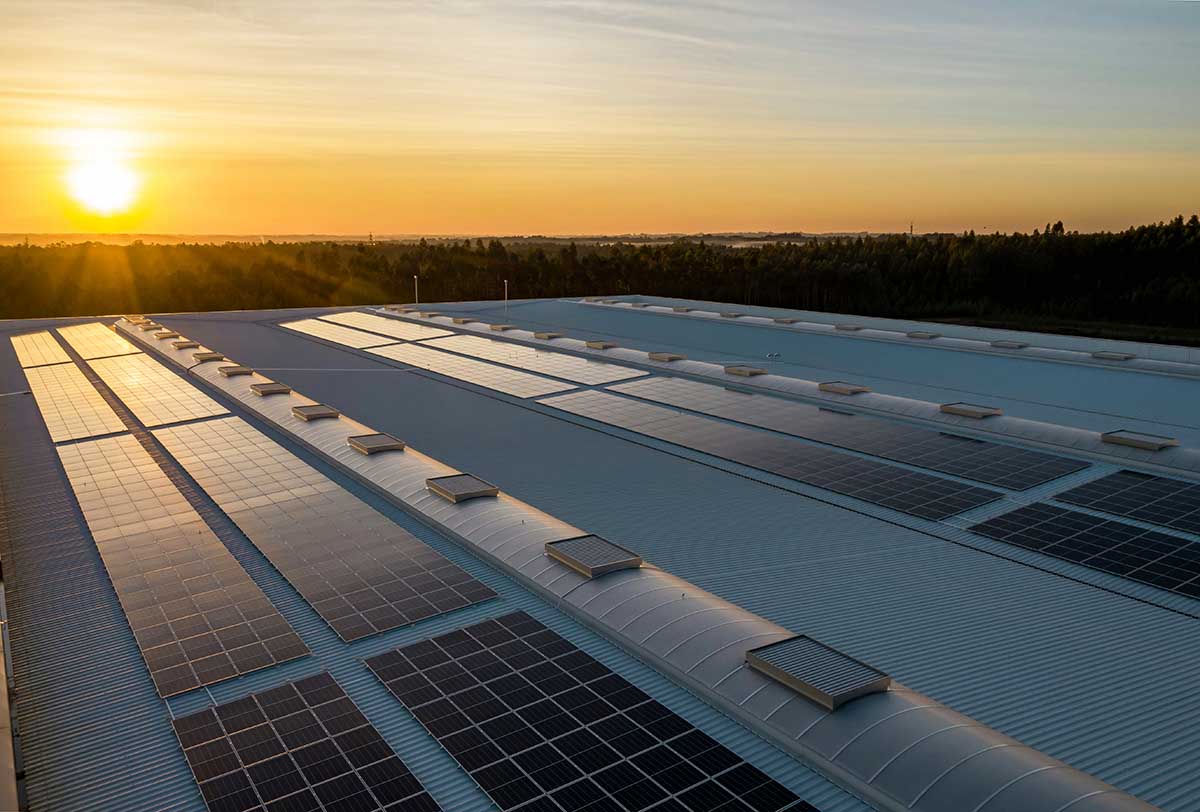
Words: Supplied :: Photo: Unsplash
Battery storage is no longer simply about keeping buildings operational during outages. It is increasingly becoming part of a property’s long-term value proposition, helping owners reduce operating costs, improve resilience, maximise the return on existing solar investments and create more attractive commercial spaces for tenants.
“Vastly improved battery technology, relentless electricity tariff increases and rising diesel costs are among the developments driving a more strategic approach to energy among South African commercial and industrial (C&I) businesses,” says Annika di Bona, Senior Project Development Engineer at Candi Solar.
“We are seeing growing demand from businesses across multiple sectors, from manufacturing to agriculture to cold chains and distribution, to implement solar PV and battery solutions and to maximise the value and flexibility of existing solar investments.”
When Backup Power Becomes a Business Liability
Loadshedding made businesses heavily reliant on generators. But what started as emergency infrastructure has become a chronic and unaffordable operating cost.
The true cost of running a generator is estimated at between R8.50 and R11.00 per kWh once servicing, fuel, logistics and depreciation are factored in.
For a medium-sized industrial facility with a 350 kVA to 500 kVA grid connection, running on a generator for as little as 40 hours per month, diesel costs can total between R100,000 and R180,000 per month. That’s significantly more than relying on grid electricity.
The sectors most exposed are those where uptime is non-negotiable: manufacturing, cold storage, agriculture and dairies are bearing the brunt.
“Relying on the grid and generators alone is no longer viable for businesses focused on cost savings, operational resilience, return on investment and long-term competitiveness,” notes di Bona.
Next Level: Strategic Energy Cost Management
Instead, businesses are moving from surviving power outages to proactively optimising energy costs. In practice, this means increasingly using a combination of solar PV, battery storage and grid electricity as part of a broader operational energy management strategy.
This is made possible due to advancements in battery storage, also known as Battery Energy Storage Systems (BESS), as well as two key industry factors: BESS systems are now easy to fit or retrofit onto existing infrastructure, and structured financing options are becoming more widely available.
The Shift to Solar + Battery
Many businesses are moving to solar PV to reduce both grid and diesel dependence. These systems have matured substantially over the last decade, with PV panel output now guaranteed for up to 30 years by leading manufacturers.
However, the real evolution happens when batteries are added. Battery storage is no longer just backup infrastructure. It has become a cost-management tool and a dynamic asset that uses energy data to reduce peak demand penalties and generate predictable, long-term savings.
As a result of the financial leverage batteries unlock, lower hardware costs and tax incentives, solar payback periods have dropped from up to 10 years historically to just two to three years today.
Di Bona adds that battery solutions, some now guaranteed for up to 10 years, can be tailored to operational priorities, with some businesses requiring full-site backup capabilities while others focus specifically on protecting critical production systems and operational infrastructure.
Either way, by adding the crucial factor of a stable power supply, solar-and-storage systems have become a non-negotiable for running a sustainable business in South Africa, helping organisations reduce their exposure to rising energy costs and supply uncertainty.
For commercial property owners, the conversation has also shifted beyond backup power. Reliable, cost-efficient energy is becoming an increasingly important consideration for tenants, particularly in sectors such as logistics, manufacturing, retail and warehousing. Buildings that combine solar PV with battery storage can help reduce operating costs while offering greater resilience and business continuity, making them more attractive in a competitive leasing market.
Double the Value of Battery Storage
Battery storage and solar are used not only for resilience but also to actively reduce energy costs. Through energy management strategies such as energy arbitrage and peak shaving, businesses are significantly improving the return on existing solar investments.
Businesses are increasingly using battery energy storage systems (BESS) to store cheaper energy for use during expensive peak tariff periods, a strategy known as energy arbitrage. By charging batteries during off-peak periods and discharging during expensive peak tariff windows, businesses can cut electricity costs significantly. Under Time-of-Use tariffs, the peak-to-off-peak difference can exceed R7/kWh in winter.
For businesses with existing solar PV installations, adding battery storage transforms a static daytime asset into an around-the-clock cost-management tool.
Batteries also facilitate peak shaving to tackle Maximum Demand penalties, which can account for between 30% and 50% of an industrial power bill, by instantly injecting stored power when demand spikes.
Smoothing the Shift
In addition to the financial advantage, there are two important factors that are accelerating adoption: businesses do not need to start from scratch, and finance is becoming more accessible.
Modern modular battery retrofits can be added to existing grid-tied solar installations with virtually zero operational downtime and can easily interface with existing inverters and switchboard infrastructure. This brings generation and storage data together within a single energy management platform, transforming a static daytime asset into a round-the-clock energy management tool.
In addition, while the upfront cost of BESS has historically been the main barrier to adoption, structured financing models including PPAs, leases and per-kWh billing are making battery storage increasingly accessible.
“The acceleration of BESS financing marks a fundamental shift in how South African industries think about energy infrastructure,” says Di Bona. “Financing through a bank is one option, but businesses are increasingly recognising the value of outsourcing the engineering and lifecycle management of these complex systems to a specialist. Energy partners such as Candi Solar not only design storage systems that account for operational requirements but also maintain the asset and ensure its performance throughout its lifecycle.”
Future-ready
Commercial property owners and businesses adopting broader energy management strategies that combine solar PV, battery storage, grid optimisation and reduced diesel dependence are also well positioned to benefit from future developments.
“For example, there is a clear industry shift towards wheeling and virtual power plants, with innovative private-sector players developing strategies that allow businesses to capitalise on excess solar generation by selling it to neighbouring operations at attractive rates.
“Similarly, with the integration of AI into energy management and active energy control, energy price hikes and supply unpredictability will become far less limiting for the South African C&I sector.
“Businesses that start approaching energy more strategically now are likely to place themselves in a far stronger competitive position over the long term,” says Di Bona.
“The same applies to commercial property. Buildings that generate, store and intelligently manage electricity are becoming increasingly attractive to occupiers looking for predictable operating costs, greater resilience and long-term sustainability.”