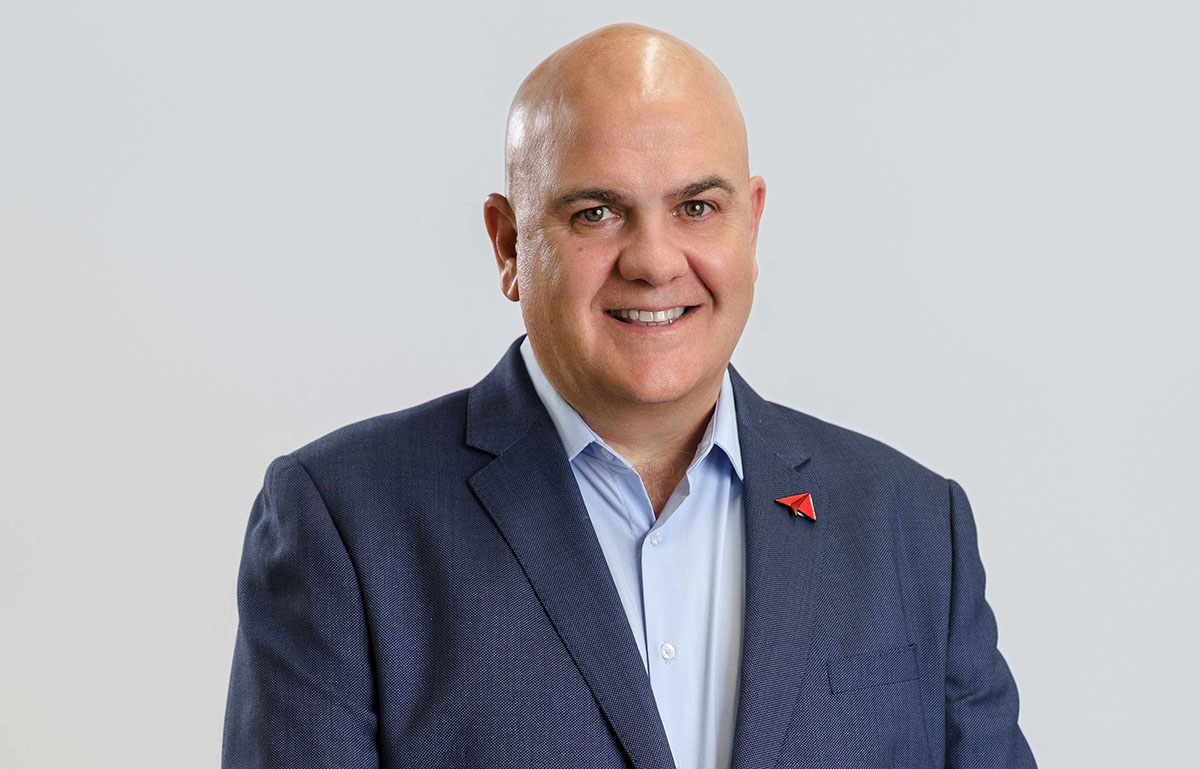
Just as investors have begun to feel more optimistic about South Africa’s outlook, with inflation moderating, financing conditions gradually improving and greater stability returning to the electricity system, the global environment has once again become more uncertain. Geopolitical tensions remain elevated, trade relationships are being redrawn, and markets continue to respond quickly to every new source of uncertainty. Andrew König, CEO of Redefine Properties, expands below.
WORDS & PHOTO: SUPPLIED
If there is one lesson from the past decade, it is that uncertainty is no longer an interruption to business. It has become the operating environment.
For property owners operating in a long-term asset class, however, the real test of resilience is not how quickly a business responds once disruption arrives, but whether it was prepared for that disruption long before it appeared. Resilience is rarely built during periods of uncertainty; it is revealed by them, through decisions made years earlier about capital allocation, portfolio construction, funding strategy and a clear understanding of the forces that shape long-term demand.
One of the easiest mistakes investors can make is to confuse a temporary market shock with a permanent shift in the way the market functions. Markets inevitably react to uncertainty, but strategy cannot be dictated by the news cycle. It has to distinguish between cyclical events and the structural changes that will continue shaping demand long after today’s disruption has passed.
That distinction is particularly relevant for South African property today. As financing conditions improve and confidence begins to recover, it is tempting to focus on the cyclical upswing. Yet while markets move in cycles, the forces that ultimately determine long-term value evolve over decades.
A reflection of economic activity
Property has always been a reflection of economic activity. Buildings derive their value not simply from location or design, but from the businesses, consumers and communities that use them. Retail centres thrive when consumers continue to spend. Industrial and logistics assets benefit as supply chains expand and goods move through the economy. Office demand grows when businesses invest and create employment.
Understanding where economic activity is heading is therefore every bit as important as understanding the assets themselves.
This philosophy has shaped the evolution of our own portfolio over many years. Although South Africa and Poland differ significantly in their economic structures and stages of development, they share an important characteristic: both are fundamentally consumption-driven economies. That insight has informed a gradual shift towards sectors supported by everyday economic activity while reducing exposure to areas, such as services, that tend to fluctuate more sharply with business confidence.
Consumption also explains why township and rural economies deserve far greater attention than they have historically received. As formal retailers, banks and service providers expand into these communities, they are responding to something more fundamental than population growth alone: the continued formalisation of economic activity and rising consumer participation.
Recognising where demand is emerging
For property investors, this is about more than identifying the next retail opportunity. It is about recognising where demand is emerging and looking beyond traditional commercial nodes to parts of the economy that have historically been underrepresented in institutional property portfolios.
The same principle applies geographically. Diversification is not simply about investing across borders; it is about building exposure to different economic cycles and risk profiles.
While South Africa remains our home market and greatest long-term opportunity, Poland provides stability, lower volatility and a different economic cycle. Together, they create a more balanced portfolio than either market could deliver independently.
Building resilience, however, extends beyond owning the right assets. It also requires maintaining the flexibility to make strategic decisions when market conditions change.
Many of the portfolio decisions that underpin our business today, including simplifying the portfolio, disposing of non-core investments and exiting certain markets, were initiated well before the challenges of recent years emerged. Those decisions were not responses to a single crisis, but part of a longer-term effort to strengthen the business and retain greater control over its strategic direction.
Financial discipline is equally important. The listed property sector has been reminded repeatedly over the past decade that resilience depends as much on balance-sheet strength as it does on asset quality. In an environment where capital has become more expensive and refinancing has become more complex, preserving financial flexibility creates strategic options.
Businesses with strong balance sheets can invest when opportunities emerge, while those under pressure are often forced into defensive decisions at precisely the wrong point in the cycle.
Perhaps nowhere is the relationship between resilience and opportunity more evident than in South Africa’s evolving energy landscape. For years, property owners approached energy primarily as a risk management challenge, investing in back- up generation and alternative power sources to protect tenants from load shedding.
Increasingly, however, those same investments are creating entirely new commercial opportunities.
Industrial and logistics assets illustrate this particularly well. Their extensive roof space makes large-scale solar generation commercially viable, while relatively modest on-site electricity demand creates the potential to participate in power purchase agreements and wheeling arrangements as South Africa’s electricity market continues to evolve.
What began as a defensive investment is gradually becoming a new source of value.
This illustrates a broader lesson. Preparing for the future is not simply about protecting a business from downside risk. It is also about recognising when structural shifts create opportunities that were previously unavailable and positioning the business to benefit before they become obvious to the wider market.
South Africa itself offers a useful reminder that structural progress rarely follows a straight line. Improving energy security, ongoing infrastructure reform and a more supportive financing environment have strengthened confidence, but they have not eliminated uncertainty. If anything, they reinforce the importance of building businesses that can participate in improving conditions while remaining resilient when the next external shock inevitably arrives.
No executive can accurately predict the next geopolitical flashpoint, financial crisis or technological disruption. The competitive advantage lies elsewhere. It comes from building a business capable of adapting to a wide range of outcomes while remaining anchored to the long-term drivers of demand.
Every market cycle creates new reasons to become distracted. The challenge is to distinguish between temporary shocks and permanent shifts in the economy. The property businesses that outperform over the long term will not necessarily be those that predict every disruption correctly. They will be the ones that entered each period of uncertainty already prepared for it, having built resilient portfolios, maintained financial flexibility and remained focused on the enduring forces shaping how people live, work, consume and invest.