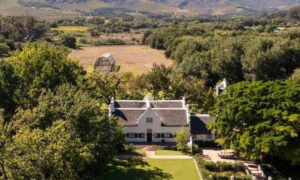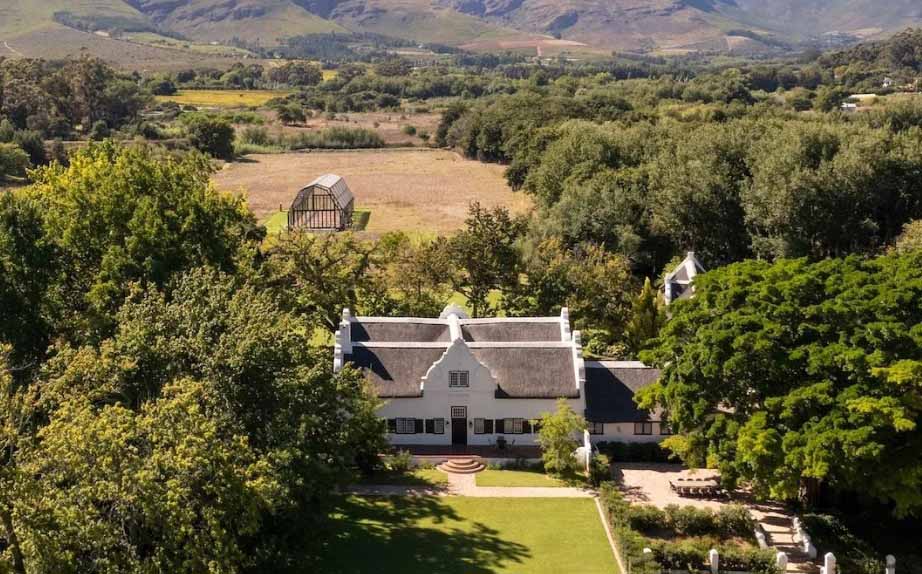
The Western Cape’s continued property market surge is creating increasingly sophisticated transaction requirements, driving growing demand for commercial funding solutions that can provide the speed, certainty and flexibility often required in complex property deals. Financial services specialist Fedgroup recently provided just such a solution in the form of a structured property finance facility to Blaauwklippen Estate in Stellenbosch, one of the Cape Winelands’ most established, mixed-use lifestyle estates.
WORDS & PHOTOS: SUPPLIED
Founded in 1682, Blaauwklippen is South Africa’s oldest registered company and one of the country’s oldest wine estates. Today, the estate has evolved into a diversified lifestyle destination encompassing vineyards, hospitality offerings, accommodation, events, a popular weekend market and a residential development component. This combination makes Blaauwklippen an excellent example of the tangible assets that sit at the heart of Fedgroup’s private capital philosophy. Fedgroup Alternative Asset Management Partner Jason Green says the transaction also reflects a broader shift in the way certain property opportunities are being funded and reflects the increasing demand for funding solutions structured around the specific characteristics of an asset rather than a one-size-fits-all approach.
He explains, “This was a time-sensitive situation where the client needed certainty and speed. Traditional funding processes are not always designed for these types of opportunities, and we were able to structure around a real asset with multiple income streams and align funding to how value is actually realised, rather than forcing a standard model onto a complex opportunity.”

Fedgroup Alternative Asset Management Partner, Jason Green
Green adds, “Traditional lenders of course still play a vital role in the property ecosystem. However, there are situations where timing is critical, where ownership structures are more complex or where value will be realised over a longer period. In these instances, a more flexible approach can be beneficial.”
He goes on to say that he appeal of assets such as Blaauwklippen is also closely linked to broader trends shaping the Western Cape property market. “The province continues to benefit from semigration, strong tourism fundamentals, relatively stable municipal performance and sustained interest from local and international buyers. Lifestyle estates, mixed-use developments and wine estate properties have been among the beneficiaries of this demand.”
Within that scenario, Stellenbosch remains one of South Africa’s most desirable residential and lifestyle destinations, combining world-renowned wine estates, established infrastructure, educational institutions, tourism appeal and proximity to Cape Town. However, Green points out that broad market headlines do not always tell the full story. “The Western Cape is not a single, uniform market. Performance varies significantly between locations, property types and price points. Some areas continue to experience strong demand and price growth, while others are becoming more competitive as new supply enters the market.”
“For investors and lenders alike, this reinforces the importance of focusing on fundamentals rather than relying solely on broader market momentum. As property ownership structures become more sophisticated and funding requirements become more nuanced, specialist private capital is expected to play an increasingly important role in the funding ecosystem.”