
Seven prominent voices in the property sector reflect on Minister of Finance Enoch Godongwana’s 2024 Budget Speech. For Budget Speech reactions we get commentary from Yael Geffen, Samuel Seeff, Greg Dart, Dr Andrew Golding, Tony Clarke, David Jacobs and Ross Mains-Sheard.
WORDS: SUPPLIED :: PHOTO: PIXABAY
Yael Geffen: Lew Geffen Sotheby’s International Realty CEO

Yael Geffen
Finance Minister Enoch Godongwana’s attempt to present a silk purse from the economic pig’s ear on his plate was laudable, but fell far short of what the country needs to turn the growth tide. It was a good news, bad news budget in the spirit of ‘one step forward, two steps back’.
A prime example is that the general fuel levy isn’t going up… but the government is increasing the carbon fuel levy to 11 cents per litre for petrol and 14 cents per litre for diesel. What we gain on the swings, we lose on the roundabout. The same goes for personal income tax. There’s no direct increase – but tax tables haven’t been adjusted for inflation either.
In plain speak, this means if you get an inflation-related wage or salary increase this year, chances are good you’ll be pushed into a higher tax bracket. It’s called “bracket creep” and to balance this the government should increase tax thresholds by at least inflation to protect consumers.
But not this year. The good news is that personal tax will stay the same. The bad news is bracket creep could cost taxpayers as much as R16 billion more in 2024.
Geffen says the “good news, bad news” two-step defines this year’s budget speech. It is laudable that more will be spent in essential areas such as health, security and social welfare, but in truth this budget does nothing to change reality for our millions of citizens drowning in debt and staggering from pay cheque to pay cheque.
It also puts the dream of owning a home even further out of reach for many South Africans, which doesn’t bode well for property market recovery this year either. Real estate is a sector that contributes substantially to GDP and the government should be making every effort to support rather than smother it.
Samuel Seeff: Chairman Seeff Property Group

Samuel Seeff
The property market welcomes the unchanged property taxes, but are concerned about the impact on household budgets of the lack of economic growth and higher inflation. Although we would have liked to have seen a cut in property taxes – Transfer Duty and Capital Gains Tax – as a boost to the property market, we are pleased that there will at least be no hikes for this tax year.
The property market is, however, disappointed that the minister did not take the opportunity to increase the transfer duty exemption threshold from R1.1 million, especially as this covers the more affordable price bands where many buyers are facing affordability challenges.
The failure to extend the solar installation tax breaks is also disappointing in view of the continued Eskom electricity crisis.
While the unchanged personal tax rates are welcomed for household budgets, the failure to adjust the tax brackets for inflation is disappointing. It means that consumers will have to absorb this into their already overburdened budgets. For prospective property buyers, it means that they will have a little less to spend on purchasing a home.
The downward adjustment of the economic growth outlook is concerning, especially at a time when the country desperately needs to return to a growth path which is obviously vital to boost the property market and selling prices.
The news that inflation has again ticked up in January (to 5.3% from 5.1% in December) is also not great ahead of the expected interest rate cuts. Nonetheless, we remain optimistic that we could see rate cuts from around mid-year. The higher than necessary interest rate has negatively affected sales volumes, and reducing it should induce more buyers to come back into the property market, he adds.
For now, Seeff says further, conditions remain particularly favourable for property buyers. The muted price growth and favourable mortgage lending conditions are supportive for the market, and buyers are able to find good value. Deposit requirements remain fairly low while first-time buyers are still able to secure full loans and, in some instances, inclusive of costs.
Greg Dart: High Street Auctions Director
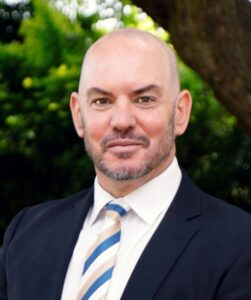
Greg Dart
This year’s budget speech is ringing alarm bells for the economy and investor confidence. The only sustainable way to broaden a nation’s revenue base is to build a vibrant economic environment that offers stability, supports job creation and invites investment.
That’s the recipe for sustainable growth. Shortcuts like imposing a global minimum corporate tax into an already unattractive economic proposition is short-sighted and shocking.
A minimum tax rate of 15% on multinationals with annual revenue exceeding €750 million that want to invest in South Africa, is tantamount to waving a banner that says ‘spend your money elsewhere’. The government should be incentivising conglomerates by offering tax benefits, not imposing a punitive tax on their global revenue.
The government’s plan to plunder the country’s most significant currency buffering fund is also profoundly disturbing. The Treasury’s Gold and Foreign Exchange Contingency Reserve Account (GFECRA) is the thin line that protects us from economic freefall as the value of the rand goes downhill on global markets.
Yes, the country’s debt exposure of more than R500 billion is dangerously high, but it was the government’s recklessness that created this mess in the first place. Why compound the error by even more recklessly draining the GFECRA of R150 billion, which will only offer a short-term solution to our sovereign debt problem, but risk our currency exposure and potentially plunge South Africa into a downward spiral that could break the economy.
Dart says the general election in May must move the political needle towards policies that support long-term economic growth. 2024 is a make-or-break year for South Africa.
The new government must prioritise solutions for the power grid and infrastructure collapse that is the current legacy of State-Owned Enterprises. Without electricity or ports and transport networks there’s literally no light at the end of the economic tunnel.
Dr Andrew Golding: Chief executive Pam Golding Property group

Dr Andrew Golding
While there were thankfully no real surprises or major tax increases, from a housing market perspective, it is regrettable that today’s National Budget did not seize the opportunity to extend the solar rooftop tax incentive for residential properties, as this expires at the end of this month (February 2024). This enabled households who invested in solar panels to receive 25% of their solar spend back as a tax credit.
Apart from hoping for an extension of this incentive, it would have been beneficial to homeowners if it had included additional costs such as generators, invertors, batteries – plus those used for security purposes – among others.
While the business incentive for solar panels will run until 2025, homeowners who are beset with the soaring costs of electricity, fuel and food, among others, as well as dealing with ongoing loadshedding, would have benefited from a much-needed extension amid the country’s energy crisis.
Consumers are also faced with an increase in the carbon fuel levy to 11c per litre for petrol and 14c per litre for diesel, which impacts not only on transport costs across the board, but is inflationary in itself. This is coupled with the fact that individuals have to contend with bracket creep, which regrettably for some, may mean that inflation-related wage increases will see their personal income possibly pushed into a higher tax bracket. Fortunately, the general fuel levy will not increase in the 2024/2025 Budget.
Given the Minister’s imperative to derive increased income, while disappointing, it was anticipated that there would be no further relief on transfer duty on residential property transactions in this year’s Budget – a factor which impacts first-time home buyers wanting to acquire their own homes. Currently, properties below R1.1 million avoid any transfer duty payments, and according to recent Lightstone statistics, the bulk of first-time buyers look to purchase in the R700 000 to R1.5 million price bands.
Of critical importance is that we begin to see significant investment in infrastructure start to take effect, which will boost market sentiment – which includes the property market – and help create a favourable and investor-friendly environment in which to conduct business – thereby increasing job creation and fuelling the economy. In this regard, it is encouraging to note the government’s intention to foster Public Private Partnerships (PPP’s), notably regarding financial and technical support in the logistics sector, namely rail and ports, among others.
Support for those impacted by floods and other climate change factors via the Climate Change Response Fund is also to be welcomed.
Most importantly, the Budget – despite some disappointments in terms of a lack of concrete measures to boost economic growth – managed to plug the revenue gap without adding significantly to the financial squeeze already endured by households. It may not have been overly surprising or exciting but it was a solid, no-nonsense budget which one may be thankful for in an important election year.
Tony Clarke: MD Rawson Property Group
David Jacobs: Gauteng Regional Manager

David Jacobs
Tony Clarke says that between SONA and the Budget Speech, general sentiment among South Africa’s real estate agents appears largely unimpressed, with a side-helping of disappointment.
We were expecting a conservative approach, It’s an election year, so the ruling party is naturally wary of rocking boats. At the same time, the fiscus is on life support, so increasing revenue was always going to be a priority. Unfortunately for the property industry, the government’s chosen route to boost revenue is centred more on taxation than on direct economic stimuli.
As a major contributor to the GDP, the real estate industry has a lot to offer the economy and the public purse. We were hoping to see this potential recognised, and a greater emphasis placed on stimulating market activity. With no increase to the transfer duty threshold, the budget may, in fact, end up having the opposite effect on market activity.
As inflation and property prices rise, fewer and fewer homes are falling under the R1.1million transfer duty threshold. That’s making it a lot more difficult for the average South African to get a foot onto the property ladder – a definite step backwards in terms of homeownership accessibility, and a missed opportunity to stimulate long-term economic growth.
It’s not just transfer duty that will make homeownership less accessible in the coming year, either. Increases in other taxes will also eat into consumer affordability.
David Jacobs adds: The government took a subtle approach to boosting tax revenue this year. They avoided highly visible increases – like general fuel levies or personal taxes – in favour of less obvious ones like a higher carbon fuel levy and no inflationary adjustments to tax brackets. The result is the same – consumers are going to be paying more in taxes, particularly if you include sin taxes – but in a way that’s easier to downplay in an election year.
More disappointing news for the real estate industry was the decision not to extend the solar rooftop tax incentive for residential properties.
Clarke says: We had high hopes that residential solar rebates would be extended past the February cutoff after the President highlighted renewable energy plans in this year’s SONA. Private households have already made an important contribution to alleviating loadshedding woes. It would be great if that contribution could be recognised and encouraged further by enabling more homeowners to embrace eco-friendly solutions that add value to their properties.
Jacobs concludes: Despite the disappointments, the budget wasn’t entirely bad news for the property industry. Things aren’t getting easier for consumers, but they’re also not getting dramatically worse. From an economic growth perspective, the focus on reducing government debt, improving infrastructure, and fostering Public Private Partnerships to support our struggling logistics sector is very encouraging. If we can see progress on these fronts, the effects on consumer and investor confidence could be significant, which would have positives knock-on effects for the property market as well as job creation and economic growth in general.
Ross Mains-Sheard: CEO Versofy SOLAR

Ross Mains-Sheard
The financial impacts of load shedding and renewable energy featured prominently in Minister of Finance Enoch Godongwana’s 2024 Budget Speech. South Africa faced a record 332 days of load shedding in 2023, significantly hindering the county’s economic growth and burdening households.
While the adoption of rooftop solar is widely recognised as a means of alleviating the country’s ongoing energy crisis, incentives for solar energy installations by individual households were cut from this year’s budget.
Amid broader fiscal constraints, this is an understandable but nonetheless disappointing outcome for South African households, which should be incentivised to make the transition to solar in the form of tax breaks, subsidies, and feed-in tariffs. Government incentives have a crucial role to play in driving solar energy adoption, particularly for households relying on a rent-to-own or a solar subscription model, which cannot afford to purchase solar panels and the necessary accompanying equipment outright.
Despite this, innovative South African companies have an opportunity to continue developing the infrastructure and technology that support a mass transition to renewable energy.