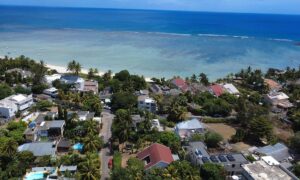
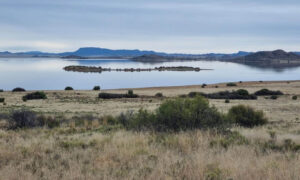
Across the world, insurance companies, particularly those in the US, are reassessing how they insure properties in wildfire high-risk areas – the options being to pull back or adjust coverage. Wildfires were not much of a concern for insurers until 2016, classifying it as a ‘secondary peril’, meaning they were less likely to occur than tropical storms and earthquakes.
WORDS: SUPPLIED :: PHOTOS: SUPPLIED
That classification has come under increasing scrutiny given that global insured losses from catastrophes and large man-made disasters from 2017 to date now account for some US$144-billion, according to Swiss RE. Estimates are that expected wildfires in 2025 could increase that figure by up to 50%, says the Harvard Business Review.
The Environmental Defence Fund expects that the size, frequency and severity of wildfires will increase in the years ahead. This is also true for South Africa. The CSIR has compiled a comprehensive story map – Wildfires: The impact of climate change on wildfires in South Africa. Itreminds us of the 2017 Garden Route wildfire that devastated the Knysna community.
Wildfires represent a growing concern for our local insurers, which requires a watchful eye. However, as Clive Hogarth, Head: Retail Pricing at Old Mutual Insure points out, alongside are two other serious climatic risks that impact homes and properties: severe storms and flooding. “A single catastrophic event – such as a major wildfire – could indeed generate interconnected losses that significantly impact insurer’s profitability.”
Regulatory and physical risk factors
However, it is unlikely that SA insurers would experience similar losses to their American counterparts. This difference stems from both regulatory and physical risk factors; the latter relating to South Africa’s predominantly brick and concrete building construction which reduces fire vulnerability compared to the wooden structures common in wildfire-prone US regions.
The regulatory environment is also different in SA. Hogarth explains: “In states like California where wildfires are rife, regulations have severely limited insurers’ ability to charge premiums that reflect the underlying risk. When insurers cannot charge risk-appropriate premiums, they have to withdraw to maintain their solvency and financial soundness.
“South Africa operates under different regulatory frameworks that allow risk-based pricing so we’re unlikely to see the same widespread market withdrawals that have impacted American states,” says Hogarth.
Unlikely, but not impossible because as the CSIR report indicates, SA already has climates with dry seasons, natural vegetation that produces sufficient fuel, and people who light fires where they should not. This is confirmed by Wits University that revealed research indicating there is likely to be an increase in the number of wildfires in regions that are already hot, dry, and water scarce.
Extreme weather events
Whilst insurance does cater for such extreme weather events, “when certain risks become too concentrated or severe, requiring all other policyholders to subsidise increasingly expensive claims, the system becomes unsustainable and inequitable,” says Hogarth.
As it stands, the insurance industry has had to increase premiums to cover escalating weather-related claims and adjust policy coverage. “Insurance operates on a delicate balance between cross-subsidisation and precise risk pricing. Customers in areas prone to severe weather events already pay higher premiums, reflecting their elevated exposure,” says Hogarth.
“Policyholders with frequent claims will continue to face escalating consequences and in severe cases, where claims become predicable or excessive, coverage may be declined entirely.”
The key word here is ‘may’ because whilst insurance exists to protect consumers from unforeseen events, property owners will need to share some of the responsibility when, for example, annual flooding represents a certainty rather than an insurable risk.
“If an extreme risk concentration did emerge in South Africa, government involvement would likely be necessary — similar to the UK’s Flood Re scheme. This programme provides subsidised flood coverage for high-risk domestic properties, funded through industry-wide levies. To prevent such a scenario, we need to be proactive in how we address land-use planning, building regulations, and infrastructure development,” says Hogarth, all of which is beyond insurers’ control.
Quantifying risks
What insurers are doing is to quantify climate-related risks. Hogarth says this is a complex and evolving process. “Old Mutual uses numerous data sources that show climate change impacts are observable and intensifying. Research from the University of Pretoria confirms increasing rainfall extremes, and data from the European Union’s Earth observation programme, Copernicus, shows temperatures consistently above 1.5 degrees Celsius compared to pre-industrial levels. This demonstrates that we are experiencing significant warming now, and as temperatures continue to rise, we anticipate more frequent extreme weather events.”
Weather-related insurance premiums
This means that insurers can apply factual evidence to their consideration of weather-related insurance premiums. Old Mutual’s pricing models, for example, incorporate historical claims experience of weather-related incidents with actuarial judgement. In other words, areas with higher exposure to specific weather periods pay correspondingly higher premiums. “But the geographic patterns are complex … there is no single regional difference.”

Private Property CEO Theodore Mseka
The formula for identifying specific ‘high-premium areas’ is challenging because different locations face several different combinations of perils. “The clearest example of risk-based pricing involves thatch properties, which face significantly higher premiums due to their extreme fire vulnerability. This demonstrates how specific risk characteristics — whether location-based or construction-related — directly translate into premium adjustments.”
Generally, higher premiums apply to properties in hail-prone areas (eg: interior plateau) that face higher storm-related premiums. Flood-prone locations (eastern coastal regions and low-lying urban areas), carry flood-risk loadings. Fire-exposed properties pay elevated premiums.
Theo Mseka, CEO of Private Property, says that while insurers explore ways to make property insurance more effective and equitable, they also need stronger support in the form of government regulations in mitigating risk. “This should include more rigid building codes for fortifying our properties, especially those that provide crucial services, such as educational and health facilities.
“And, when rebuilding after a disaster, higher and more effective construction standards must be employed. Safer and stronger building codes introduce better resilience against climate-change catastrophes.
“We don’t want to reach the point where every homeowner is facing higher premiums under the cross-subsidisation model, or where owners are living without the vital protection that insurance provides, simply because they can’t afford it,” says Mseka. He also makes the point that natural disasters are already considered tipping points that can edge homeowners, particularly low-income households, into financial ruin.
Home loans and insurance
“Homeowner’s insurance is a pre-condition for most home loans so many have no choice but to pay the higher premiums, which can effectively reduce home values and demand in high-risk areas.
“Keeping insurance premiums artificially low in risky areas is not the solution. It would leave our property, and for that matter our financial markets, over-exposed to climate risk. It’s not that higher premiums are absorbed by insurers as profit either. Increasingly we are seeing insurers invest heavily in climate risk modelling and actuarial analysis to better assess and manage risks.”
If insurers were to retreat from high-risk areas completely, property owners would find themselves heavily burdened by the financial investment required to mitigate climate-related events, such as the use of fire-resistant building materials, hail- and wind-resistant roofing, or flood barriers. “The question then is how much more expensive is it to live without insurance?” says Mseka.