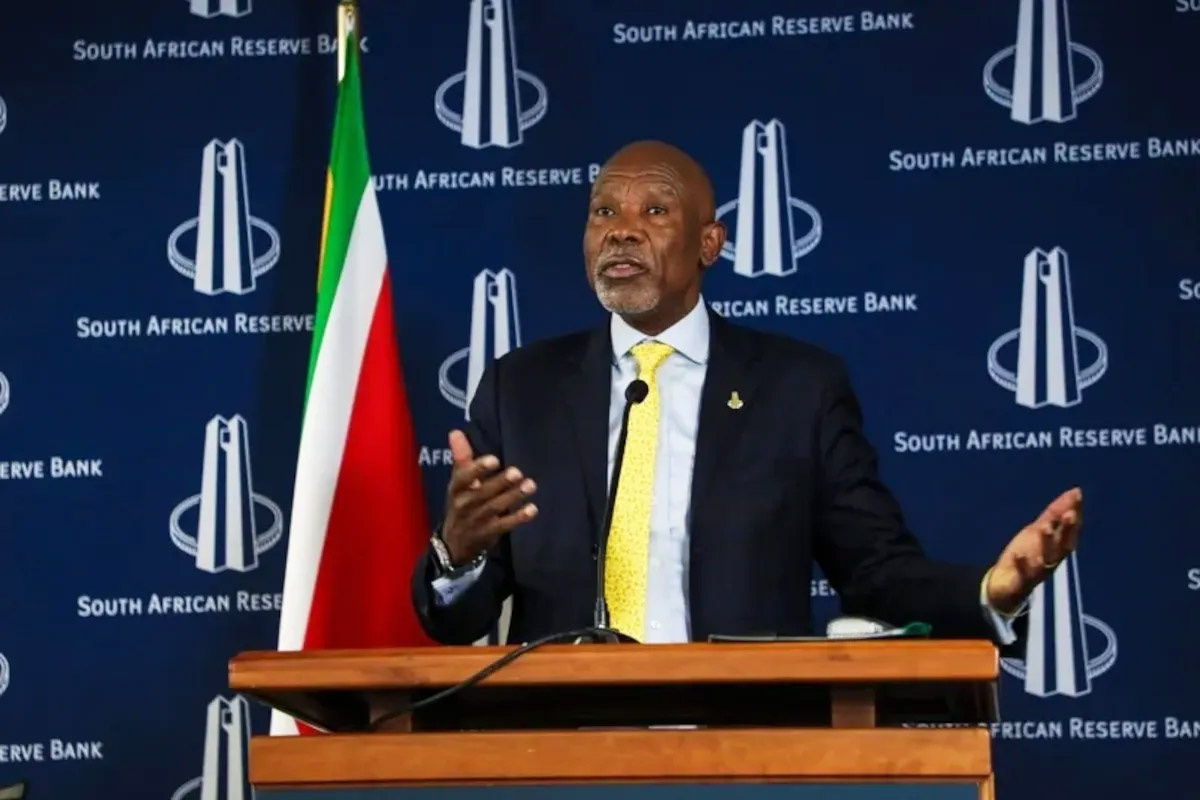
We get reaction from Yael Geffen, Berry Everitt, Stephen Whitcombe and Bradd Bendall on 18 September, 2025, on South Africa’s interest rate announcement.
WORDS: SUPPLIED & TOP PHOTO: SARB
Yael Geffen – Lew Geffen Sotheby’s International Realty CEO

Yael Geffen
In a climate of significant external pressure and internal economic fragility, the Monetary Policy Committee’s (MPC) decision to hold the repo rate steady is a commendable and necessary act of stability.
As Yael Geffen notes, despite the US Federal Reserve cuts rates, the South African Reserve Bank is navigating a far more complex reality, one directly impacted by the new US trade tariffs and the looming specter of further selective punitive sanctions.
“These external threats cast a long shadow over investment confidence, making domestic stability paramount.
“The MPC’s prudent pause provides a crucial foundation of predictability.
“In an environment of heightened global uncertainty and persistent domestic vulnerabilities, certainty in monetary policy is the bedrock upon which investment confidence is built – especially for a tangible asset class like real estate.”
Geffen says the SARB’s upward revision of the GDP growth forecast to 1.2% for 2025, even in the face of a weaker export outlook, is a positive signal.
“However, as Governor Kganyago rightly cautioned, we cannot overstate one good quarter. The real test remains attracting the ‘much higher investment levels’ required for robust growth. This is where the real estate sector offers a beacon of resilience.”
Geffen observes that the market is adapting, finding opportunity amidst the challenges.
“We are seeing that achieving a more robust growth trajectory will require much higher investment levels,” she says, “and we are witnessing a tangible expression of this in the strategic acquisition of property by both local and international buyers seeking a stable store of value in a uncertain global landscape.”
Geffen says while the dysfunction in administered prices like electricity continues to erode purchasing power, the property market demonstrates its unique ability to weather these storms.
“The decision to hold rates, coupled with contained inflation projections, means that real estate remains a compelling and secure investment for those looking to the country’s long-term future, even as we navigate these significant political and economic crosscurrents.”
Berry Everitt – CEO of Chas Everitt International CEO

Berry Everitt
Act now and cut thousands off the cost of your home.
The South African Reserve Bank’s decision today to keep interest rates unchanged, leaving the home loan base rate at 10.5%, brings both relief and frustration for homeowners. Relief because the widely expected hold means there is no increase in monthly bond repayments, but frustration because many had really hoped that August’s inflation decline would provide scope for another cut.
South Africa’s headline inflation eased to 3,3% in August, which was below expectation and prompted speculation that the Monetary Policy Committee (MPC) might consider lowering the repo rate from 7% to 6,75%. This was further fuelled by the Federal Reserve decision on Wednesday to drop US interest rates, and SA’s urgent need to boost economic growth and employment.
However, with inflation expected to edge higher again towards the end of the year, and with the SARB eyeing its new 3% inflation target, the MPC took a cautious stance and for homeowners, that means no change for now in their monthly bond repayments.
With the cost of living having declined steeply since last year, though, many may find that they now have a little more leeway to take some practical steps to manage their home loans more effectively, pay them off faster and make substantial savings on the overall cost of their homes.
The first step they can take is to pay extra funds into their bond account whenever possible. Even small additional payments can shave years off the repayment term and save significant interest over time. For example, by adding just R500 to the minimum monthly repayment on bond of R1m, they would reduce the overall loan terms by 33 months and save over R230 000 worth of interest.
Secondly, they should try to make at least one extra home loan payment every year, especially if they receive an annual bonus or 13th cheque. This will reduce the capital amount outstanding and lower the minimum monthly repayment due, making it even easier to pay more than is needed every month.
Third, they should also try to channel any tax refunds, monetary gifts or part-time earnings into their bond accounts.
Fourth, they should look at pruning any non-essential spending from their budgets or consolidating higher-interest debt so they can free up more cash to redirect into their bond.
All being well, economists are expecting at least one more rate cut this year, in November, and should this materialise, it might be a good time for homeowners in good standing to negotiate for better home loan terms. And they will be in a stronger position to do so if they take control of their financial future now by adopting strategies that demonstrate their determination to reduce their debts.
Stephen Whitcombe – FIRZT Realty MD

Stephen Whitcombe
Don’t put the brakes on your home search.
Consumers keen to become homeowners should not let this week’s decision by the Reserve Bank to hold interest rates steady stall their search for a suitable property.
“The decision, which means the home loan base rate stays at 10,5% for now, comes at a time when residential property demand is gaining momentum and prices are climbing,” says Stephen Whitcombe, MD of leading Johannesburg property company FIRZT Realty.
“And while some prospective buyers may feel hesitant to commit in the face of higher borrowing costs, a delay now could cost them much more in the long run.”
StatsSA’s latest Residential Property Price Indicator shows that annual national residential property price inflation was already running at 5,9% in April this year, with sectional title properties recording growth of 4,8% and freehold properties climbing even faster at 6,4%.
“Against this backdrop, holding off on a purchase in the hope that rates may be cut further later this year will most likely only result in buyers having to pay more for the same property – and qualify for a bigger bond.
“So our strong advice to prospective buyers is not to hit pause on their property search. The reality is that the housing market is getting stronger, especially in Johannesburg, which is the financial heart of SA. Demand here is robust, stock is moving and prices are rising steadily.
“Waiting for the next interest rate cut might feel like the safe option, but in practice it often means that by the time buyers return to the market, homes cost more and affordability is no better,” he says.
Whitcombe suggests that prospective buyers should focus on the fundamentals rather than trying to time the market. “If you find the right property that fits your budget and lifestyle, the best strategy is to act decisively. You can always accelerate your bond repayments later when interest rates ease. What you can’t do is go back and buy at yesterday’s prices.”
With economists still divided on whether further cuts will materialise before year-end, today’s decision underscores the uncertainty of the rate path ahead. But what remains clear is that South Africa’s property market continues to see solid growth. For serious buyers, the message is to keep searching, stay prequalified, and be ready to move when the right opportunity presents itself.
Bradd Bendall – BetterBond National Head of Sales

Bradd Bendall
While another repo rate cut would have been welcome, today’s decision to hold the prime lending rate steady signals the Reserve Bank’s commitment to bringing inflation closer to the anchor target of 3%. For homeowners, it means short-term restraint, but also the potential for renewed momentum in the property market once the next cycle of rate cuts begins, hopefully in the months ahead. Five repo rate cuts since September last year have already stabilised conditions, and BetterBond’s latest figures show home loan applications are up 14% year-on-year in July and August.
House prices are also strengthening, up 2.1% year-on-year, with the average purchase price for first-time buyers reaching a record R1.3 million in July and August. Deposit requirements have also eased, dropping 5% year-on-year according to BetterBond’s latest data.
Holding the repo rate steady could lead to a stabilisation of property prices which, coupled with favourable deposit requirements, could make the market accessible to more buyers. It also sends a strong signal to investors about the Reserve Bank’s focus on stability and long-term economic growth.