
Norman Raad, CEO of Broll Auctions and Sales.
Johannesburg’s commercial property market is being priced by postal code rather than by asset, according to a commercial property expert – a mistake made visible thanks to a study of pricing trends across South Africa’s two largest commercial property markets.
WORDS & PHOTOS: SUPPLIED
Gmaven, a company behind one of Africa’s largest commercial property databases, compared more than 25 700 properties and over 1 500 high-value transactions made across Cape Town and Johannesburg since 2020. It found that although the two cities have roughly equal commercial property markets by total value, at about R370 billion each, comparable office space in Cape Town trades at around double the price of the same quality space in Johannesburg – a gap worth at least R200 billion.
“Behind every number in the study are business decisions that commercial property brokers witness regularly, be it a tenant who moved to Rosebank rather than renew in the inner city, or a company that relocated a regional office to Cape Town because its staff could get to work without prolonged periods of water or electricity outages disrupting their home lives,” said Norman Raad, CEO of Broll Auctions and Sales.
“These decisions, multiplied across the city over several years, are what Gmaven has stated as causing a R200-billion gap in commercial property values between South Africa’s two biggest commercial hubs. While many will choose to read this as confirmation that Johannesburg is in irreversible decline, there are more factors at play.”
One discount applied indiscriminately
“What the data reveals is that the market is pricing municipal risk at the level of the city, not the level of the asset. A well-let, well-managed building in Sandton, Waterfall or Rosebank does not carry the same exposure to failing service delivery, deteriorating infrastructure or municipal billing chaos as a building in a struggling inner-city node, yet both are being discounted as if they did. That is a market working lazily by applying a single governance-risk premium across an entire municipality because doing the precinct-level and building-level work is harder than reading a headline. Sound tenants, balance sheets and solid management are being priced as though they carry the same risk as a distressed asset three kilometres away with an unrelated set of problems.”
An open bidding process can be used to close the distance between perceived risk and real risk, he said, often where the money is made.

Mayfair Convent School, an asset in a precinct associated with urban decay attracted a large number of interested bidders and was snapped up before auction at well over its reserve.
Where auctions earn their place in this market
According to Raad, private treaty sales tend to anchor to whatever the prevailing city-wide sentiment is, because negotiation between two parties has a lesser ability to test what the wider market may believe an asset is worth. A competitive auction process puts a well-diligenced asset in front of multiple buyers who have done the precinct-level and building-level homework, and lets them bid against each other.
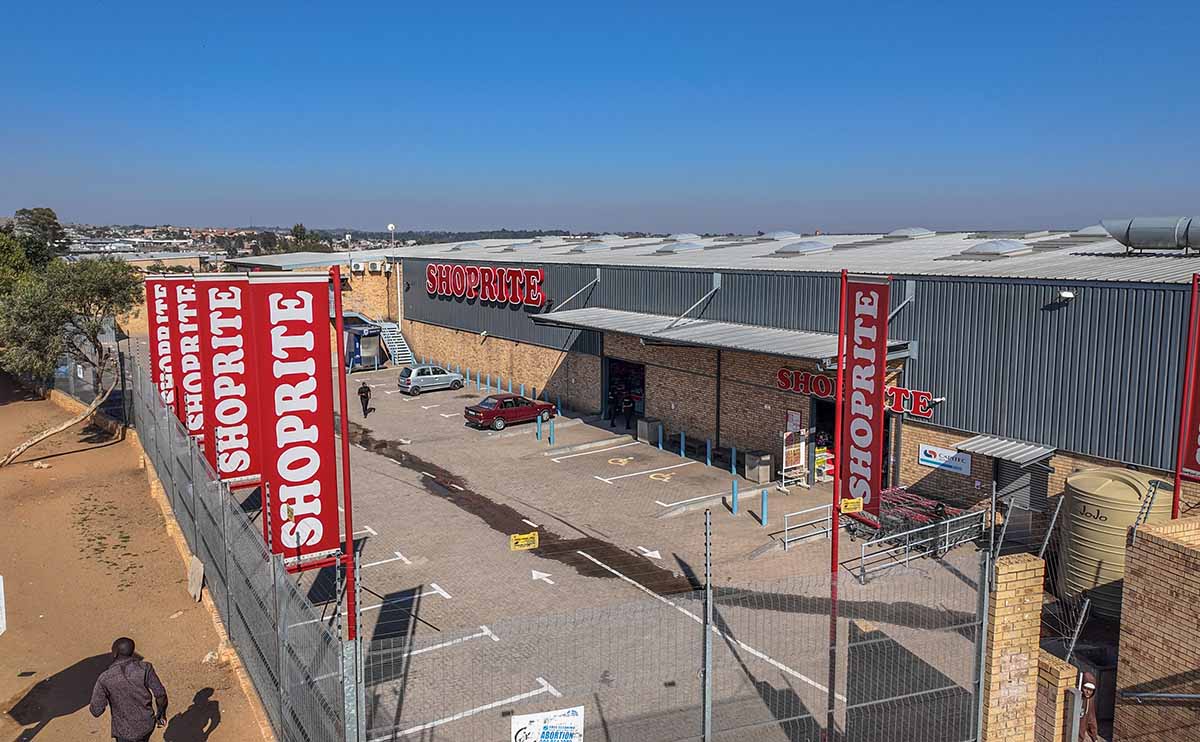
“The results of in-depth research often turn the city-wide discount on its head.” In Cosmo City, a ShopRite-anchored retail centre in the heart of the township sold before auction at almost full mandate price, and a fuel station in the same node achieved more than double its reserve on the auction floor. The Mayfair Convent is another example – an asset in a precinct associated with crime, overcrowded buildings and urban decay, it attracted a large number of interested bidders and was snapped up before auction at well over its reserve. “These are buyers who know that despite lower desirability from an optics point of view, these properties still provide excellent return on investment.”
By contrast, a piece of land on the corner of Oxford and Bompas Road, in one of the city’s blue-chip nodes, received a pre-auction offer that was rejected. On auction day, the property fetched about 10% below the seller’s expectation but was spot on with Broll’s own valuation intelligence.
“The juxtaposition is instructive – stock in areas carrying the heaviest reputational discount can be easier to sell than stock in some of the blue-chip nodes, because the buyers competing for it have priced the asset in front of them rather than the postal code around it. That is why, in a split market like this one, an auction of a quality Johannesburg asset is the fastest and most accurate route to a true price that has been agreed upon by buyers who have looked past the city-wide number to the fundamentals of the specific building, tenant base and precinct in front of them. For sellers who believe their asset has been swept up in a discount it does not deserve, that is the mechanism that proves it one way or the other. For buyers, it is a chance to secure quality ahead of any broader re-rating.”
The turnaround is not hypothetical
Raad said the picture is more dynamic than data points suggest, pointing to Johannesburg’s governance position. The City has been working through a National Treasury-backed turnaround process this year, including agreed interventions to stabilise its finances and unlock withheld equitable share funding. Government’s Johannesburg working group has pointed to early gains, among them an improved revenue collection rate and stronger partnerships with city improvement districts and property owners in the inner city. “I predicted earlier this year that improvements within the City would have a contagion effect of improving the surrounding areas. One may argue that this does not quite erase the scale of the challenge, but treating every Johannesburg asset as carrying the same static, worst-case risk is already out of date in some precincts, and getting more out of date as the turnaround work continues.”
The role of price discovery
“Johannesburg’s city-wide discount is real, but it is not evenly deserved,” said Raad. “The competitive auction process is the clearest way for both sellers and buyers to find out where the true value sits, especially when the wider market is pricing by headline sentiment rather than fundamentals.”