
Guy Dowding, Director at Galetti Auction.
Just six years ago, Alleyroads was one of South Africa’s most prominent affordable housing developers, attracting institutional funding, expanding rapidly and building a multibillion-rand property portfolio.
WORDS & IMAGES :: SUPPLIED
Today, the picture looks vastly different, with business rescue practitioners and liquidators working through the restructuring and unwinding of parts of the Alleyroads group.
“In 2020, mezzanine fund Vantage Capital invested R82 million into the group’s Kaya Lane development in Lebowakgomo at a time when, by Vantage’s own account, most banks would not take on early-stage construction risk. Two years later, the International Finance Corporation, the private sector arm of the World Bank Group, announced a R325 million green loan to support the development of more than 1,000 rental apartments around Johannesburg.”
The appetite for investment was there and by late 2023, Alleyroads had acquired the Pulse Property Group portfolio for around R1.2 billion, adding approximately 3,300 student beds and rental apartments across 46 developments.
Thereafter, Alleyroads expanded into retail through Riverstone Mall in Meyerton. The group also invested in solar and battery systems to take more than 1,000 apartments off the national grid and set ambitious targets for Green-certified affordable housing, with its own website valuing the portfolio at R5 billion.
Today a number of Alleyroads companies are in business rescue or liquidation, and their properties are being sold to repay creditors.
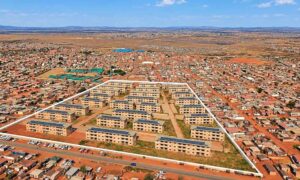
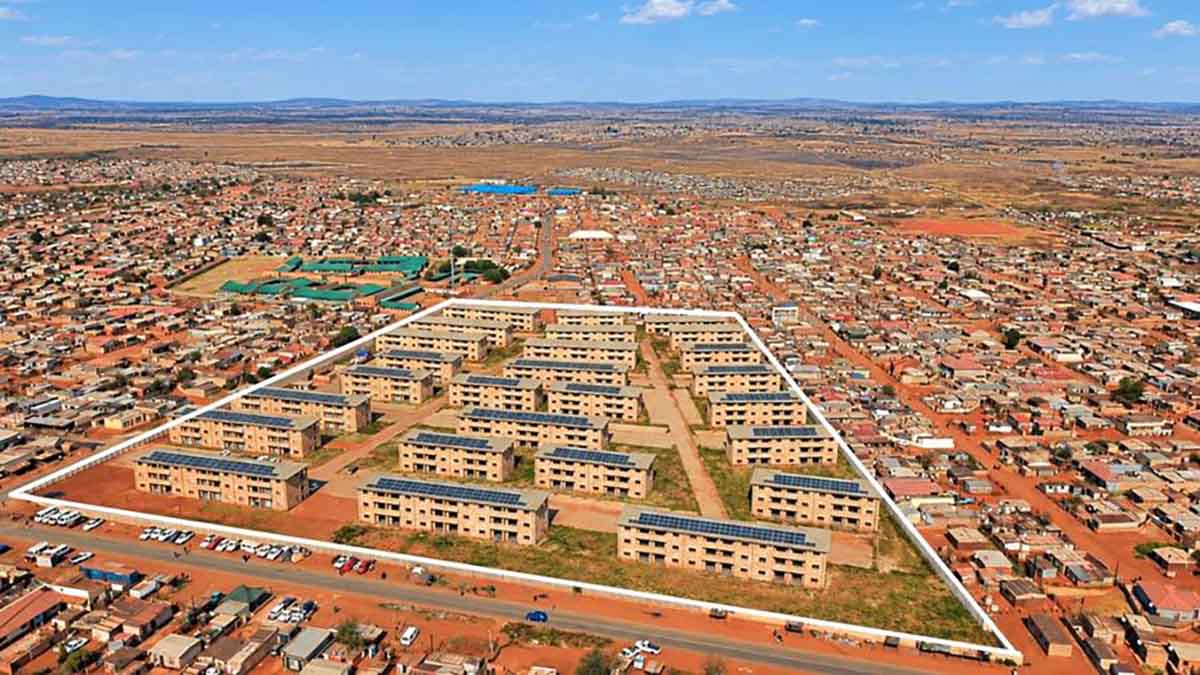
Among the assets now coming to market are three residential developments going on Auction on 25 November: a 13,176m² development at Kaya Lane Estate in Lebowakgomo, an 18,192m² development in Katlehong South and a 12,288m² development at Umthala Mews in Vosloorus.
But to understand the opportunity these assets present in today’s market, Guy Dowding, Director at Galetti Auction says investors first need to understand the scale and ambition of the business behind them.
“Well-located rental housing for teachers, nurses, police officers and young professionals remains an important part of South Africa’s housing mix,” he says. “Nothing about these sales suggests that demand has gone away. What they do show is just how tight the numbers can be when you are trying to deliver affordable housing at scale.”
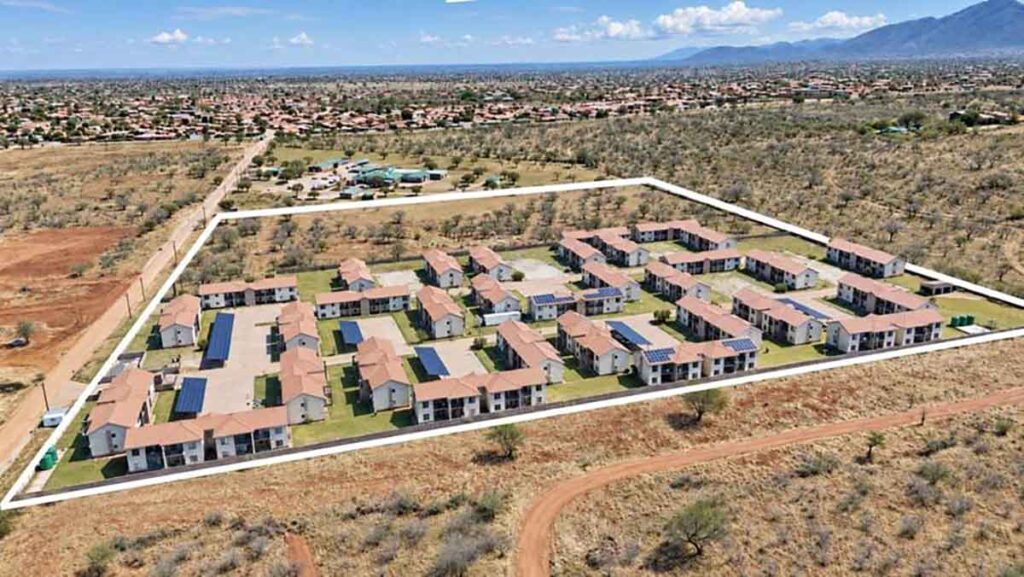
In 2020, mezzanine fund Vantage Capital invested R82 million into the group’s Kaya Lane development in Lebowakgomo.
Outlining clear opportunity in unfinished developments
With several of the developments partially completed, Dowding urges prospective investors to look beyond the immediate circumstances of the sale. “An unfinished development doesn’t mean you are starting from zero,” he says. “Someone else has already paid for the land, the approvals, the bulk services and a good part of the construction. The opportunity is to understand what is already there, what is left to spend and whether the numbers work to finish it.”
A new owner is also buying the asset at what it is worth today, which may be very different from what has already been spent on it. “If you buy at the right level, understand what it is going to cost to finish and know what the property can realistically earn once it is completed, there may still be a very good opportunity.”
“A cheap price isn’t necessarily a bargain if there is still a fortune to spend,” says Dowding. “Equally, an unfinished building shouldn’t be written off if the cost to complete still leaves a decent return.”
What investors need to look at
Dowding shares there are six basic factors that prospective buyers should consider:
- Rental demand: What are people paying in the area, how full are competing properties and is there demand for more accommodation?
- Location: Is the property close to jobs, transport, schools, shops and other services?
- Condition and compliance: What condition is the development in and what approvals or compliance issues are still outstanding?
- Operating costs: What will utilities, security, maintenance and municipal charges cost?
- Completion costs: How much construction is left and what still needs to be spent on infrastructure and professional fees?
- The numbers: Once all of those costs are taken into account, what can the property realistically earn and does the investment still make sense?
Getting these developments moving again
For Dowding, getting these developments moving will create a positive spin-off – one that cannot be overlooked.
“South Africa’s township economy is booming. Standard Bank’s 2025 Township Informal Economy Report estimated its contribution at around R900 billion, while data presented at the South African Township Economy Conference estimated that between 500,000 and 700,000 township-based SMMEs employ between 1.5 million and two million people.”
He adds, “Sometimes people talk about the township economy as though it still needs to be created. It doesn’t. People already live, work, spend money and run businesses in these communities. What new investment can do is add to that.”
Getting an unfinished development back under construction can bring builders and tradespeople back to site, create work for contractors and generate demand for materials and transport.
And that activity doesn’t stop when the building is finished. “Once people move in, you need security, cleaning, maintenance and property management,” says Dowding. “Those households also shop locally, use local services and spend money in the surrounding area. So getting a development moving again can have a much wider knock-on effect.”
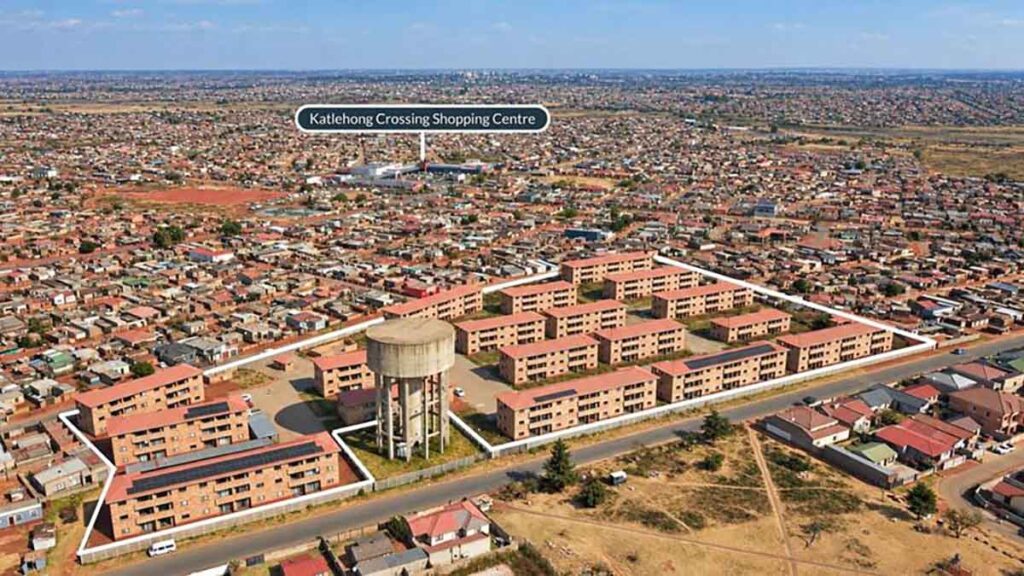
Umthala Mews in Vosloorus.
Why the outcome matters beyond Alleyroads
For Dowding, the outcome of these sales goes beyond Alleyroads, providing a broader indication of investor appetite for affordable housing projects in South Africa.
“If these buildings sell at a sensible price, get finished and ultimately fill with tenants, it shows that the value in the housing can still be there even when the original developer is no longer the one taking it forward,” says Dowding. “That is an important message for funders and investors looking at the next affordable housing project. An open, competitive auction gives the market a fair and transparent way to decide what these assets are worth today.”
Ultimately, the focus shifts from what happened to Alleyroads to what happens next. “The need for affordable housing hasn’t gone away,” he concludes. “There is already money, work and infrastructure tied up in these properties. The opportunity now is to find the right buyers who can make the numbers work, finish what has been started and get these developments working again.”
The live auction takes place on 25 November 2026, at 11:00 at Nine Yards, 167 Jan Smuts Avenue, Parktown North, Randburg. Property information packs and listings are available through Galetti.