Barry Kaganson, CEO of Auria Senior Living says that fewer than one in 50 older South Africans has access to formal senior living accommodation. There are 2,9million people over age 70 in this country, and places for no more than 100,000 of them. He comments further below:
WORDS & PHOTOS: SUPPLIED
In the private sector, cost remains a factor prohibiting much of the population from accessing senior housing, and I am not going to pretend otherwise. Well-run senior living communities are expensive to build and expensive to operate, and for most South Africans they are financially out of reach – a dynamic not restricted to our country alone. But among the people for whom cost is not the obstacle, take-up is still far lower than it ought to be.
Among prospective residents who have the financial means to consider senior living, we repeatedly encounter another barrier: perception. Dated, drab facilities, a tea trolley coming round at eleven, a television playing to an empty lounge. Many people formed that picture by visiting a grandparent thirty years ago, and very little since has given us cause to revisit it. The clearest evidence of that is what happens when someone finally walks into a modern senior living community. The reaction is not only enthusiasm about the amenities. It is surprise at how little the place resembles what they arrived expecting, and how much residents are able to get out of life by living there.
Newer communities take their cues from hotels
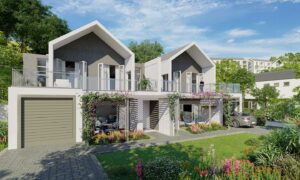
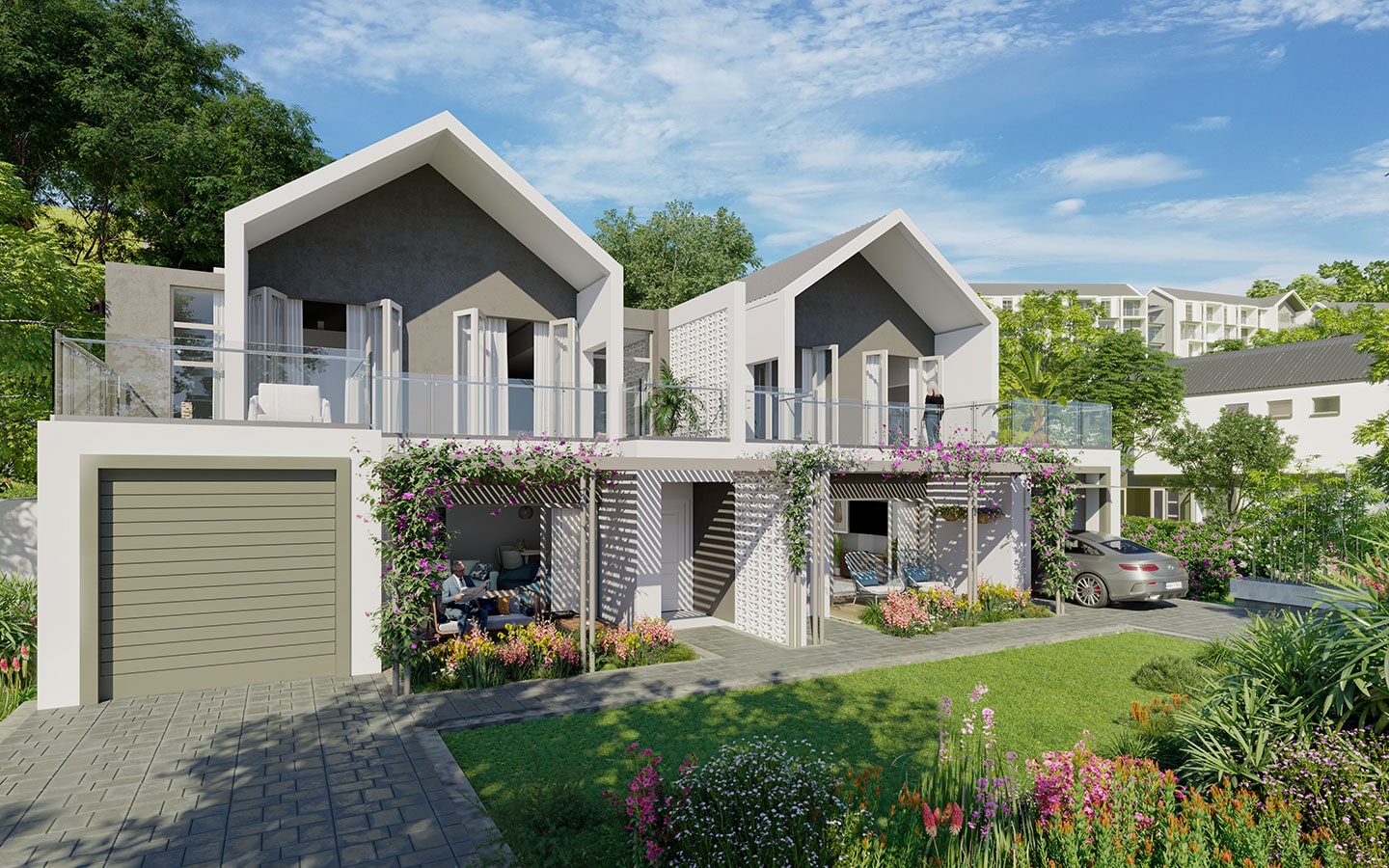
The buildings changed. Newer communities take their cues from hotels rather than hospitals. Food matters now. So do gyms, pools, libraries, workshops and whatever else residents ask for often enough. Nursing is on site without being the reason the place exists. Apartments got bigger and got their kitchens back. Communal areas are designed for people who will be in them during the day.
That did not come from the sector’s own imagination. It came from the people it serves. Over the past decade, we have seen residents spend their adult lives dining out, travelling extensively, and choosing where and how they live, and they have no intention of handing over the running of their days to anybody. Investors agree. JLL’s investor research found 86% of respondents planning to expand their senior housing portfolios against 4% reducing exposure, with transaction volumes at their highest level worldwide, in a decade.
Locally, the stock is split. Approximately 13% of it was developed after 2020, and just more than 25% was built before 2000, with the balance being developed in between. The newest communities and the earliest ones have very little in common. The difficulty is that the earlier ones are still standing and still occupied, and they are the ones most South Africans have actually walked into.
Waiting narrows the options rather than protecting them. When the move only happens after a health scare or a bereavement, it gets made in a fortnight, and rarely by the person moving. At that point the best communities are simply not available, because the ones worth having are rarely the ones with a home standing empty, and the choice collapses to whatever can take somebody immediately. The residents who speak most warmly about the decision are almost always the ones who made it while they were still choosing on lifestyle grounds.
The practical advice is unglamorous. Anyone in their early seventies should look at two or three communities in the frame of mind they would bring to viewing a house they had no urgent need to buy, and ask what happens if health changes, and whether independent living, assisted living and frail care sit on one property or whether a second move may be required down the line..
The financial model deserves the same attention. A life right is not ownership. It buys the right to occupy a home for the rest of a person’s life while the operator keeps the asset, ensuring its long-term capital appreciation by being aligned with residents to have the most positive impact on their quality of life. What differs enormously between developments is what comes back at the end, and when. Some return the full original price, some deduct a fee that grows with each year of occupation, and in most schemes the money is only released once the home has been resold. Those the questions worth asking of any operator, and any operator worth choosing will answer them plainly.
Independence and wellbeing
None of this requires thinking of this as an admission of needing help, or that one is ready to “reduce” one’s lifestyle. In fact, independence and wellbeing vastly improve when older adults move into well-run senior living communities. The question then is not “why did I do this?” but rather, “why did I not do this sooner ?”
The sector, like any, has earned some of the caution it attracts. Operators have failed, contracts have been written badly, and people have lost money and security as a result. Always get information and recommendations from existing residents – no one is better placed to answer questions than someone who experiences daily life in these communities.
The same demographic arithmetic that has pulled international capital into this sector applies here. South Africa’s population is ageing rapidly – the stock to house it barely exists, and money follows that kind of imbalance eventually. More will be built.
Development follows visible demand, and extensive wait-lists at well-run communities tell their own story. But far too few people are looking into this as a choice when they are able to make it, relying instead on their own memory of “institutional” aged care facilities from many years ago, when people aged differently, and senior living communities weren’t, as they are today, somewhere where life got considerably better..