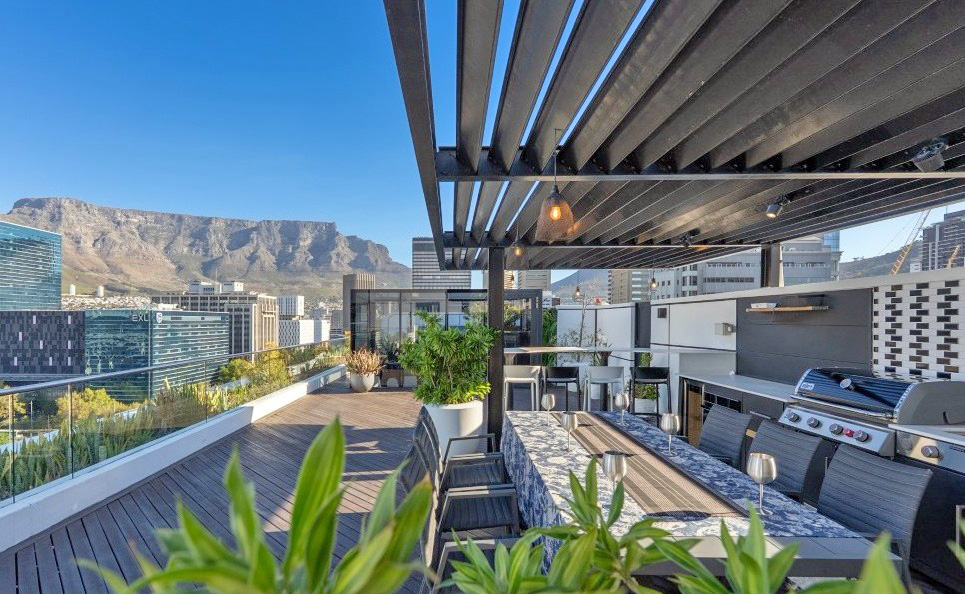
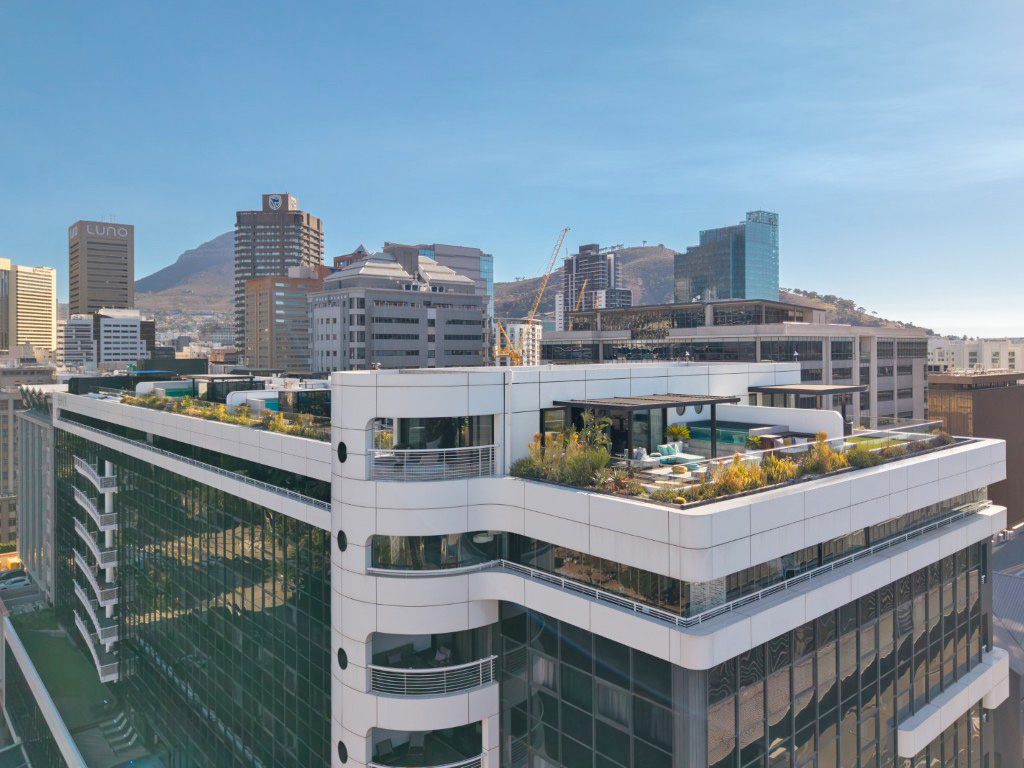
Almost every Cape Town property at this level faces the sea from Clifton or Camps Bay. This one sits eleven floors above the city itself: six en-suite bedrooms and two heated rooftop pools at the top of a converted bank headquarters on the Foreshore. It goes under the hammer with High Street Auctions on 3 September.
WORDS: SUPPLIED | PHOTOGRAPHS: HIGH STREET AUCTIONS
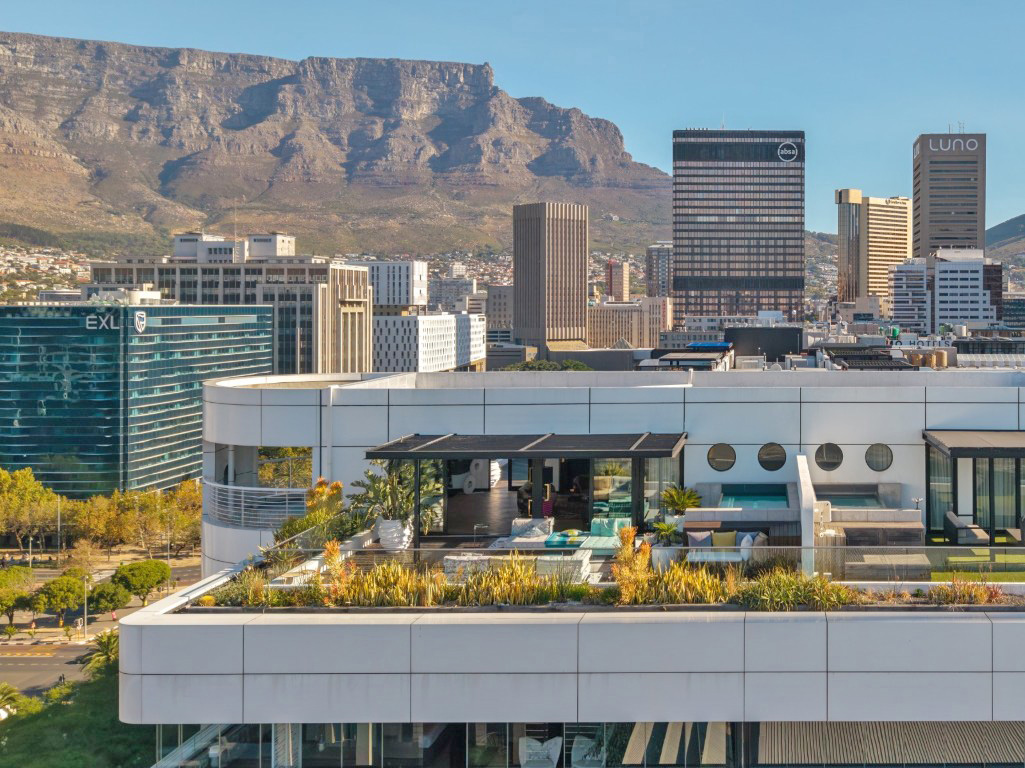
Walk east along Strand Street early enough and the light comes off the water before it comes off the mountain. The name is the clue. Strand is Dutch and Afrikaans for shore, and for two centuries that is what this street was: the line where Table Bay stopped and the settlement began. The Castle of Good Hope went up on the waterline. Everything seaward of that kerb is younger than powered flight.
Between 1937 and 1945 a Dutch dredging firm moved the tide line 194 hectares out into the bay, and the city walked out after it. One residence now sits at the top of the building that stands on that reclaimed land, carrying a 17th-century street name on ground the war itself held up.
How did a Cape Town bank become a penthouse?
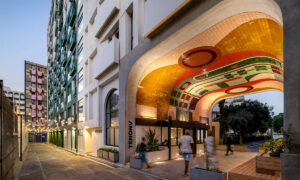
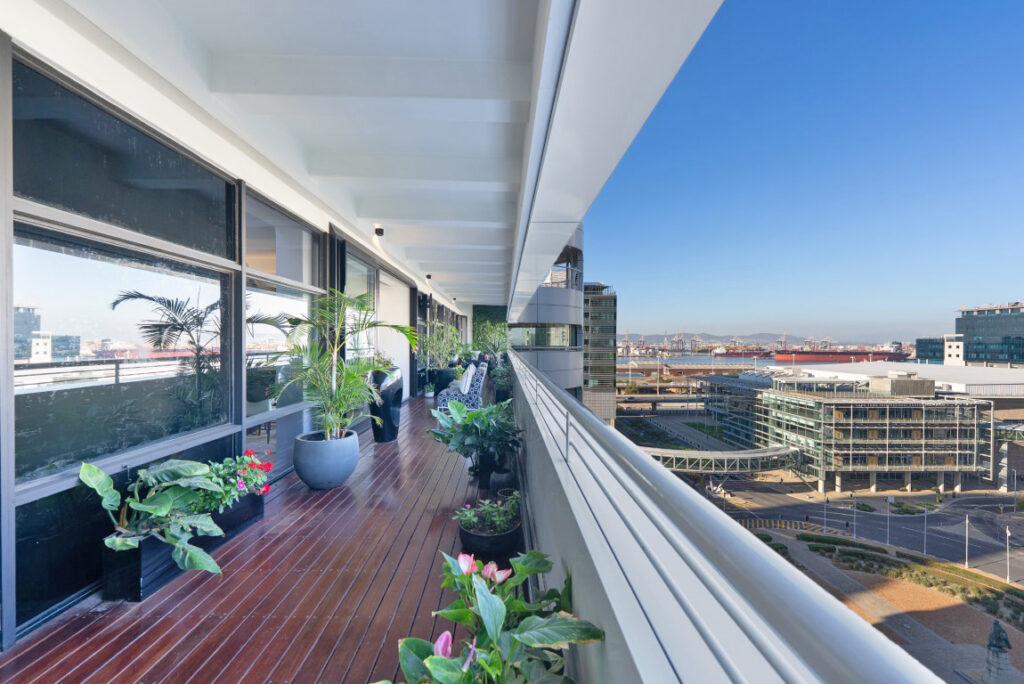
The sea became land, the land took a road, and the road took a bank. Nedbank built its headquarters on the new ground at 57 Heerengracht and left when the money moved. Newmark turned the building, now The Onyx, into sectional-title apartments, from studios of about 35 square metres up to penthouses with roof gardens and private pools, and runs it as a hotel at the same time. Guests check in downstairs, owners use the same lobby, and the building draws little distinction between them.
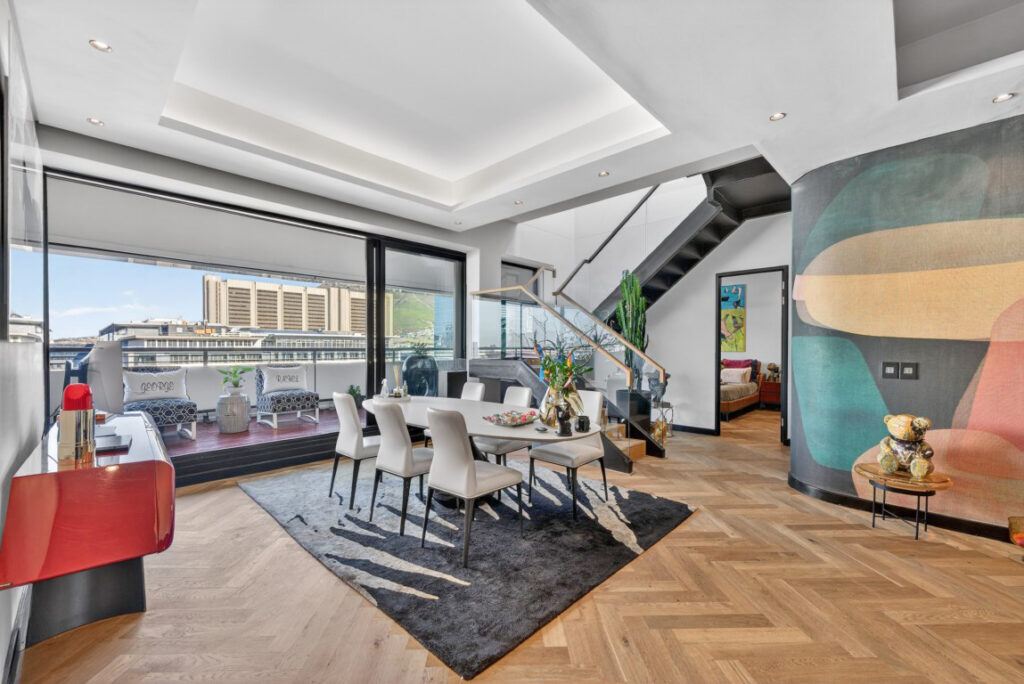
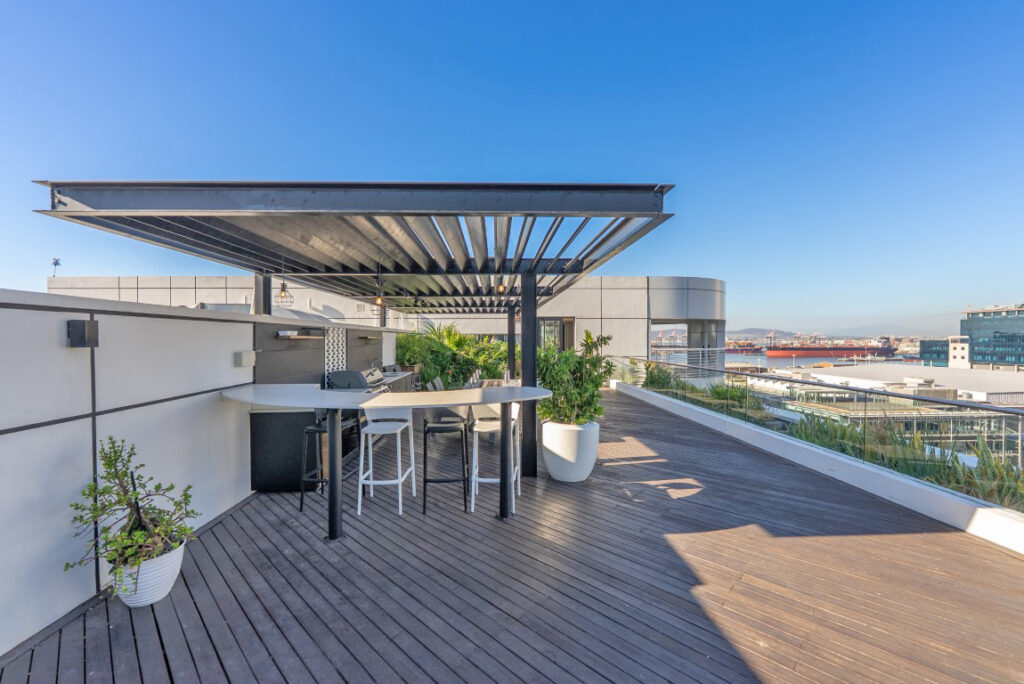
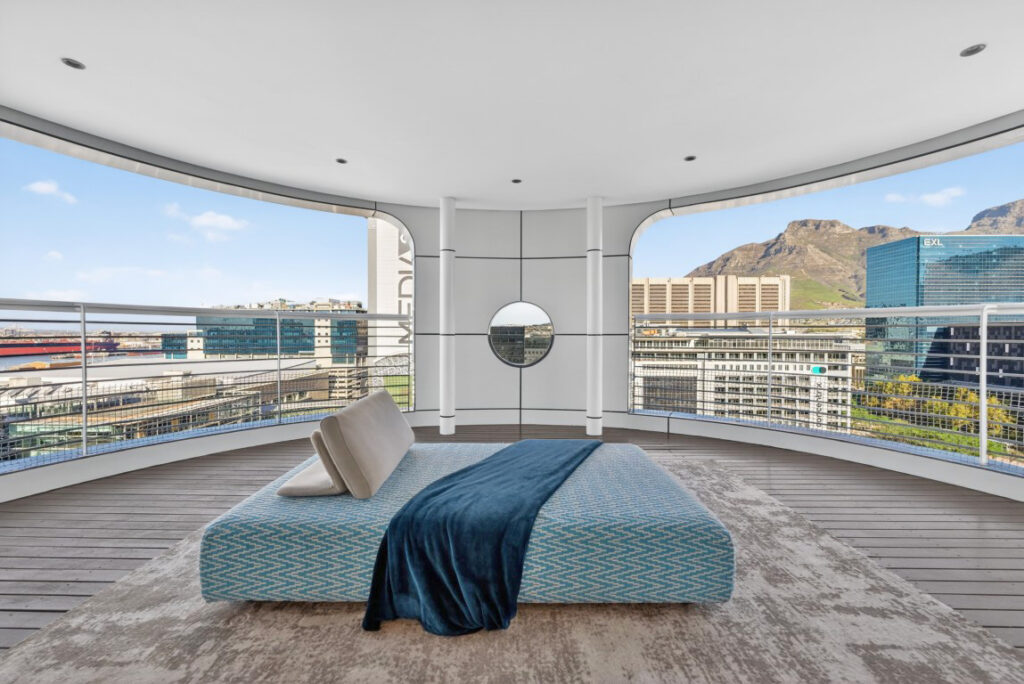
The two penthouses at the top were combined into one residence. Herringbone oak runs the length of the living level and a black steel stair climbs towards the roof, where a braai sits in an outdoor kitchen between two heated pools that take the south-easter full in the face.
Penthouses like this do not come up often in Cape Town. This one goes to auction with High Street Auctions on 3 September.
Why penthouses like this are so scarce in Cape Town
Almost everything that sells above R50 million in Cape Town faces the sea from the Atlantic Seaboard: Clifton, Bantry Bay, Camps Bay, Fresnaye. That is where the money has always gone, and it is where the stock is. A residence of this size and specification in the city itself is close to a category of one.
New York has hundreds of them. London has hundreds. Cape Town has a handful, because the city was never built to house people at this level. The CBD was offices, the Foreshore was offices, and the apartments arrived afterwards, converted out of buildings that were put up for something else. There is no district here producing Manhattan-style lofts at scale, and none is being planned.
Meanwhile the demand keeps climbing. Turnover across the Atlantic Seaboard and City Bowl reached R11.3 billion against R8.9 billion the year before, and sales above R20 million rose 61% to R4.2 billion. City Bowl stock now moves faster than the coast does: 71% of transactions close inside a month against 55% on the Seaboard, and 76% achieve at or near asking. Agents report waiting lists, and units selling on the day they are listed. The pressure is visible right across the metro: just this month a Newlands penthouse set a new Southern Suburbs record at R15.9 million.
Sixteen properties in the whole of Cape Town changed hands above R50 million last year. Very few of them were in the city.
Cape Town sales above R50 million last year
Of City Bowl sales close inside a month
Per m², Manhattan luxury condominium
Per m², premium Cape Town
What’s inside this exceptional penthouse
So much for the ground it stands on. When the hammer is raised on 3 September, bidding opens at R50 million. Here is what is actually inside, and why each part of it matters to whoever ends up buying it.
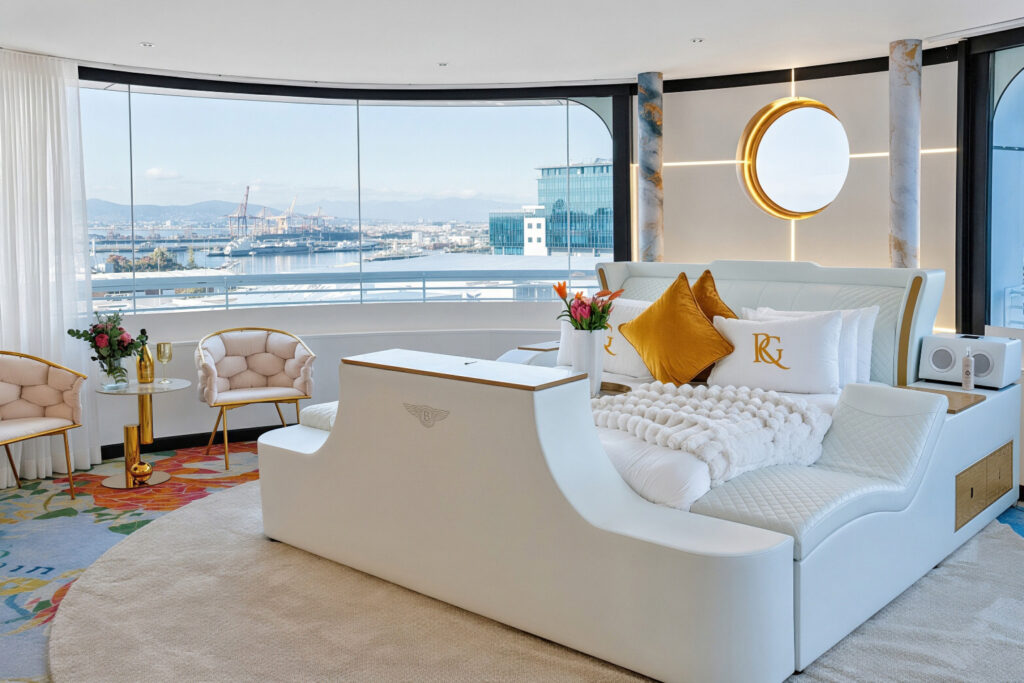
1. Two penthouses, combined. Six en-suite bedrooms and a guest bathroom, two lounges, a kitchen with separate scullery. Scale like this cannot be assembled to order in a finished building. It happens to a buyer rather than being arranged by one.
2. Four parking bays, two storerooms. For an owner who is elsewhere eight months a year, the question is not how the residence looks occupied. It is what happens to it empty. Four secure bays and dedicated storage mean nothing is left exposed, and nothing needs to be moved.
3. A staffed hotel around it, and sold furnished. Twenty-four hour concierge, housekeeping, room service and valet parking, a gym and pool on the fourth floor, two restaurants at street level, and a residence the particulars record as conveying fully furnished, including Roche Bobois pieces. Lock-up-and-go stops being a phrase: nothing needs shipping, and nothing stops when the eleventh floor goes dark.
4. Sectional title, rental pool optional. Participation in the hotel-managed rental pool is offered as a choice rather than a condition, so an owner can let the residence through the operator or simply occupy it. Levies, house rules and the terms of that election sit in the investor pack, released on registration with High Street Auctions.
Who is competing for Cape Town’s scarcest property?
Buyer one: the foreign investor. Mostly European, Asian and American, and they take roughly 40% of everything sold above R10 million in South Africa. The law does not restrict ownership by nationality: a non-resident may hold freehold, at any value, with no visa and no residence permit. Bidding runs live and online, so a buyer in London or Dubai is no further from the room than one sitting in it.
They are not comparing this against Camps Bay. They are comparing it against the city apartment they already own somewhere else, and that is where the arithmetic turns. A Manhattan luxury condominium averages about $27,000 a square metre. Premium Cape Town runs near $3,100. For the price of a good floor in Tribeca they can buy the whole building’s roof.
Buyer two: the local portfolio buyer. Already holding Cape Town property and watching the coast get bid away from them. The city is where the value has moved: the convention centre across the road, the V&A a walk away, and a serviced building that removes the part of a Seaboard house which costs money whether or not anyone is in it.
Both groups are chasing the same shortage. Agents in the super-prime segment now report waiting lists, and stock selling on the day it lists. Two buyers of very different kinds want the same small number of properties, and this is one of them.
A residence like this normally changes hands quietly, over months, between people who already know each other. This one has a date on it. The hammer falls at midday on 3 September, and whoever has done the work by then will own it.
Auction details
Date: 3 September 2026, 12:00
Format: Live and virtual online auction
Live venue: Gordon Institute of Business Science (GIBS), 26 Melville Road, Illovo, Johannesburg
Web reference: 119203
Register to bid: www.property.highstreetauctions.com. Registration releases the investor pack, the Rules of Auction and the Conditions of Sale.
Foreign buyers: common questions
Can a non-resident buy residential property in South Africa?
Yes. South African law places no restriction on ownership by nationality. A non-resident may buy residential property freehold, with no limit on the number of properties, no minimum price and no requirement to hold a visa or residence permit.
How is finance structured for a non-resident buyer?
South African banks typically lend non-residents up to about 50% of value, with the balance introduced as offshore funds. Those funds must be routed through an authorised dealer so that the transaction is recorded for exchange-control purposes, and FICA verification applies to passport, proof of address and source of funds.
Can an overseas buyer bid at the auction without travelling to South Africa?
Yes. The 3 September 2026 auction runs live and virtual online together. The live room is at the Gordon Institute of Business Science in Illovo, Johannesburg, and registered bidders may participate online from anywhere. Registration is handled by High Street Auctions and releases the investor pack, the Rules of Auction and the Conditions of Sale.
What tax applies when a non-resident later sells?
On a disposal above R2 million by a non-resident seller, the purchaser must withhold and pay an amount to SARS under section 35A of the Income Tax Act: 7.5% where the seller is a natural person, 10% for a company and 15% for a trust. The withholding is an advance payment against the seller’s eventual capital gains tax liability, not an additional tax.
What conveys with the sale?
The particulars record the residence as sold fully furnished, including Roche Bobois pieces. The inventory schedule, together with the levy structure, house rules and any letting restrictions applying to sectional-title units within an operating hotel building, is set out in the investor pack released on registration.
Property offered by High Street Auctions, web reference 119203. The Onyx, 57 Heerengracht Street, Foreshore, Cape Town.