South African businesses urgently need more reliable, lower-cost power. However, Asbestos Roofs in many older commercial and industrial buildings have become a major barrier to rooftop solar adoption.
Current asbestos safety rules mean that standard roof-mounted solar systems cannot be installed directly onto these roofs. This adds cost, complexity, and delays to projects. In response, a more integrated solution is emerging. It involves replacing asbestos roofing and installing solar as a single, coordinated energy upgrade. This approach removes compliance obstacles. It also improves insurability, strengthens long-term reliability, and future-proofs the building as a commercial asset.

Why Asbestos Roofs Rules Matter for Solar Projects
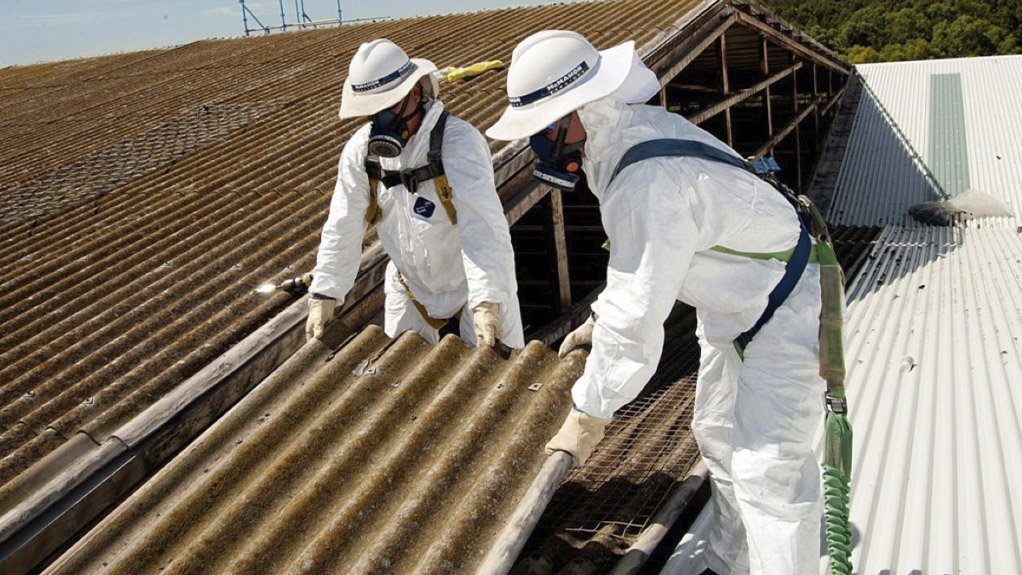
The asbestos regulations are designed to prevent disturbance of asbestos-containing materials. In practical terms, roofs containing asbestos cannot be drilled into, cut, or used to support new equipment, including solar panels.
As a result, solar installations on buildings with Asbestos Roofs typically only move forward once the asbestos roofing has been replaced or a compliant alternative mounting solution is in place.
For many businesses, especially those in older properties, this has shifted the conversation. It is no longer whether to install solar. It is how to do so safely and legally, while addressing ageing roofs that are difficult to insure, costly to maintain, and increasingly restrict access to on-site renewable energy.
Some businesses have tried to work around asbestos restrictions. They install solar on raised steel structures above the existing roof. However, this does not remove the asbestos. It does not resolve the underlying compliance issue linked to Asbestos Roofs. Regulatory obligations, liability exposure, and insurance complications remain.
The Growing Case for Solar Despite Asbestos Roofs
According to GreenCape’s 2025 Energy Services Market Intelligence Report, embedded solar photovoltaic (PV) systems can deliver electricity at costs well below prevailing grid tariffs for commercial and industrial users. Broadly, the levelised cost of electricity from embedded solar PV is typically 40–60% lower than grid power, depending on tariff structures and usage patterns.
In addition, qualifying solar installations may be eligible for a 100% write-off of the system cost in the first year under Section 12B of the Income Tax Act, subject to eligibility.
Yet for many buildings with Asbestos Roofs, these advantages remain out of reach. The business case for solar is not weak. The cost and complexity of roof replacement remain prohibitive.
A High-Cost Barrier and a New Way to Overcome Asbestos Roofs Challenges
The cost of replacing Asbestos Roofs remains one of the largest obstacles facing businesses seeking to adopt rooftop solar. To address this, Candi Solar, a Swiss-founded solar developer, financier, and operator serving South Africa’s commercial and industrial sector, has introduced a financing model that integrates roof replacement and solar installation within a single, fully financed energy upgrade.
Rather than requiring businesses to fund roof replacement separately, Candi Solar can finance asbestos roof removal and replacement upfront as part of a coordinated solar project. Both elements are structured within the same capital framework.
To ensure safety and regulatory compliance, Candi Solar works with accredited asbestos removal specialists. They manage the required surveys, removal, replacement, and statutory clearance process before solar installation begins.

Performance-Linked Instalment Sale (PLIS)
To make solar installation more financially accessible for buildings with Asbestos Roofs, Candi Solar offers a Performance-Linked Instalment Sale (PLIS) model. This financing structure reduces the need for significant upfront capital. It spreads the cost of the solar PV system over time. Businesses can still benefit from applicable solar incentives and allowances.
Under PLIS, customers take ownership of the solar asset from the outset. Repayments are linked to the system’s actual performance. If generation falls below the agreed performance benchmark, instalments automatically adjust downward. This provides a built-in cash-flow buffer.
Where roof replacement is required to enable a roof-mounted solar installation, the associated asbestos roof replacement costs can be structured alongside the solar system within the same overall agreement. It is not treated as a once-off capital outlay.
This enables businesses to address ageing Asbestos Roofs and install solar PV as a single, coordinated project. The solar system is financed under PLIS to unlock lower-cost on-site energy and applicable incentives.
Richard Flamand, Candi Solar’s South Africa Lead, says the approach has transformed what was previously a prohibitive compliance challenge into a financially viable pathway to solar adoption.
“By structuring asbestos roof replacement and solar installation together within a single, integrated financing model, companies can modernise essential infrastructure and secure long-term energy cost stability without locking up capital. The delivery and performance risk sits with Candi Solar, reducing complexity for the customer while PLIS provides a clear path to ownership, with predictable repayments.”
A Practical Next Step for Businesses with Asbestos Roofs
Businesses operating from buildings with Asbestos Roofs, or evaluating rooftop solar to reduce costs and strengthen resilience, should begin by confirming whether their facility has a legally compliant Asbestos Inventory. If one does not exist, or is out of date, a certified asbestos inspection professional must complete the required survey.
From there, Candi Solar works with accredited asbestos and engineering partners. They help businesses understand their compliance obligations. Also, they assess whether the roof is structurally suitable for solar. They explore compliant pathways to on-site generation.
Where roof replacement is not the preferred option, alternative solutions may be considered. These include carports or ground-mounted systems, depending on site constraints and long-term objectives.
“Many businesses feel overwhelmed by the compliance and cost barriers around Asbestos Roofs and solar,” Flamand notes. “Our role is to remove that friction, making it simple, safe, and financially viable to transition to renewable energy.”
For more information or to begin an assessment contact [email protected].