Property
South Africa’s most undervalued towns where property prices are still low — but rising fast!

While Cape Town and Johannesburg dominate property headlines, a quieter story is unfolding in South Africa’s smaller towns and coastal villages. Remote work migration, load-shedding fatigue driving urban exodus, and improving road and internet infrastructure are pushing demand — and prices — in places that were barely on the property map five years ago. For buyers looking to find properties to buy in South Africa that still offer real value, these are the towns worth watching.
WORDS: NEWSDESK :: PHOTOS: UNSPLASH
Why small-town property is having a moment
The shift began during lockdown, when remote work gave professional households the freedom to relocate. Many chose smaller towns with lower living costs, cleaner air, better traffic, and a sense of community that larger cities struggle to provide. That trend has continued and, in many cases, accelerated.
At the same time, South Africa’s municipal dysfunction has driven buyers to towns with reliable private water and electricity infrastructure, or where Eskom supply and municipal services are more consistently managed. Areas with strong local governance and active business improvement districts have attracted disproportionate inflows of new residents.
The result is a two-tier small-town market: towns that have already been discovered and repriced (Knysna, Hermanus, Plettenberg Bay), and those that are still in the early stages of their repricing cycle. The latter is where buyers seeking value should be looking.
Ballito and the KwaZulu-Natal North Coast
Ballito and the broader Dolphin Coast corridor between Durban and Stanger have seen sustained demand growth over the past several years. Proximity to King Shaka International Airport, a warm climate, and a well-developed lifestyle infrastructure including several quality private schools have made this area increasingly attractive to Johannesburg and Pretoria families.
Property prices in Ballito proper have risen meaningfully, but secondary nodes along the N2 corridor — Salt Rock, Shaka’s Rock, Blythedale Beach, and parts of Umdloti — still offer entry points that are significantly lower than comparable coastal living in the Western Cape. Estate properties, sectional title units, and vacant land with ocean views all remain available at prices that are beginning to attract more serious investor interest.
Dullstroom, Mpumalanga
Dullstroom has long been a weekend destination for Johannesburg fly-fishing and nature enthusiasts, but it is increasingly attracting permanent and semi-permanent residents. The town has reliable water, a well-maintained main street, and a small but active hospitality sector.
Its elevation and cool climate are a practical draw for buyers looking to escape Highveld heat, and the four-hour drive from Cape Town and ninety minutes from Johannesburg makes it genuinely accessible. Entry-level cottages and smallholdings have historically been affordable, though prices are firming as demand increases. Buyers with an eye on short-term rental income should note that Dullstroom’s tourism infrastructure is well established and occupancy rates are generally strong.
Langebaan, Western Cape
Langebaan is best known as a kitesurfing and water sports destination, but it is evolving into a genuine residential market. Located about 90 kilometres north of Cape Town on the West Coast, it offers clean beaches, a national park, a well-regarded school, and significantly lower property prices than comparable coastal towns in the Cape.
Property prices in Langebaan have risen in recent years but remain affordable relative to places like Hermanus or Wilderness. New residential developments are under construction, reflecting developer confidence in continued demand. For buyers priced out of the more established Western Cape coastal markets, Langebaan offers a credible alternative with room for further price growth.

Riversdale and the Langeberg Corridor
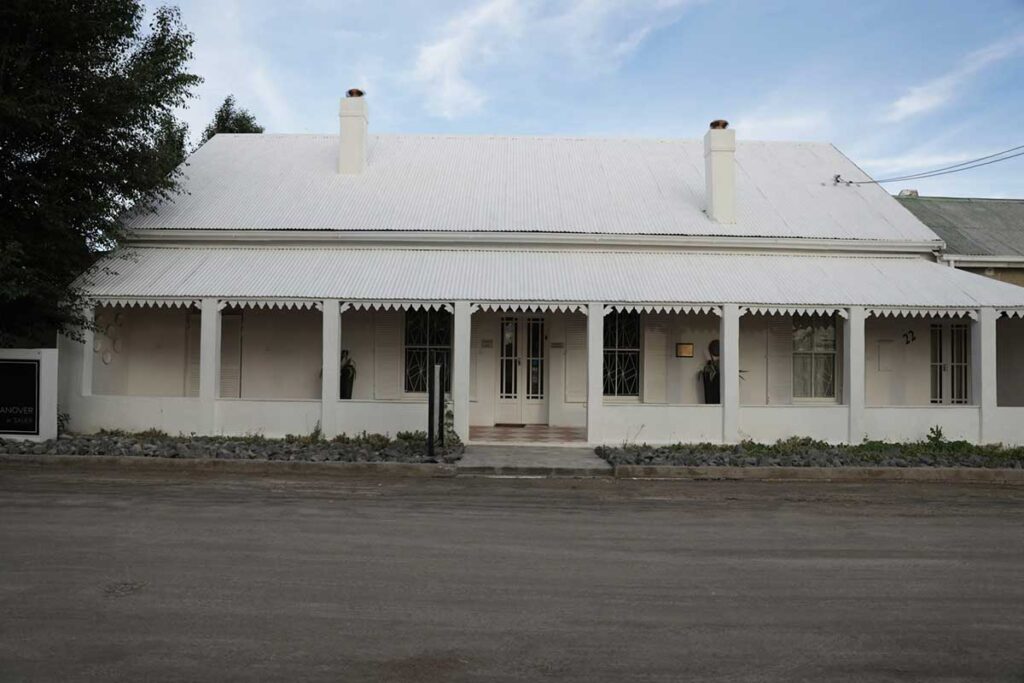
The Overberg and Little Karoo towns strung along the N2 between Swellendam and Mossel Bay — including Riversdale, Heidelberg, and Witsand — are beginning to attract attention from buyers seeking genuine affordability in the Western Cape.
These are agricultural service towns with limited tourism infrastructure compared to the Garden Route, but they offer large plots, freestanding homes, and a pace of life that appeals to a specific type of relocator. Prices remain very low relative to coastal alternatives, and the towns sit within a few hours of both Cape Town and George. For buyers with flexibility on lifestyle and a longer time horizon, this corridor represents some of the best value currently available in the Western Cape.
Estcourt and the KwaZulu-Natal Midlands
The KwaZulu-Natal Midlands has been a known quantity for buyers seeking affordable country living for years, but the mid-tier towns in the region — Estcourt, Mooi River, and Weenen — remain genuinely underpriced relative to Nottingham Road and Hilton, which have already been substantially repriced.
The Midlands offers good rainfall, scenic landscapes, proximity to the Drakensberg, and access to several well-regarded private and public schools. Smallholdings, agricultural plots, and freestanding homes are all available at prices that would be unthinkable in most metropolitan areas. Buyers who can work remotely and value space, privacy, and clean air over urban convenience should consider this region carefully.
What to check before buying in a smaller town
Value without due diligence can quickly become a liability. Before buying in any secondary town, establish the following.
Municipal health. Check whether the municipality has received a clean audit from the Auditor-General in recent years. Municipalities in financial distress often struggle to maintain water, electricity, and roads — which directly affects your quality of life and your property’s resale value.
Infrastructure reliability. Is the area on a reliable Eskom feed or a struggling municipality grid? Does the town have its own water source or is it reliant on a regional system? These questions matter more in a small town than in a city where redundancy is built in.
Connectivity. Remote work viability depends on internet access. Check whether fibre has been laid in the area or is planned, and what the mobile data coverage is like. An otherwise ideal property is significantly less useful if connectivity is poor.
Rental and resale market depth. In very small towns, the pool of potential buyers and tenants is shallow. If your circumstances change and you need to sell or let the property quickly, a limited local market can make this difficult. Research recent comparable sales before committing.
In conclusion
The best time to buy cheap property in South Africa is before the majority of buyers have identified the opportunity. The towns listed here are not undiscovered — informed buyers are already moving in — but they are at an earlier stage of their pricing cycle than the established coastal and lifestyle markets. Buyers who do thorough due diligence and are prepared to commit to a longer hold period will find genuine value in South Africa’s secondary markets.